
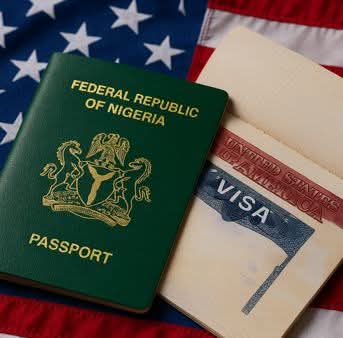
In a sweeping revision of its visa policies, the United States Department of State has officially downgraded the validity of non-immigrant visas issued to Nigerian citizens. Effective immediately, most non-diplomatic and non-immigrant U.S. visas granted to Nigerians will now be single-entry and valid for only three months.
This change, announced through a press release from the U.S. Embassy and Consulate in Nigeria, marks a significant shift in visa reciprocity between the two nations.
What This Means for Nigerians
Any U.S. visa issued before July 8, 2025, will retain its full validity. However, all newly issued visas going forward—except for diplomatic categories—will fall under the revised policy. This update places Nigeria alongside a small group of countries currently facing restricted visa terms under the U.S. visa reciprocity schedule.
The U.S. Department of State cited standard global security benchmarks and the principle of reciprocity as the driving forces behind the policy update. Key criteria influencing the decision include:
The statement emphasized that these benchmarks are applied uniformly across the world and subject to periodic reviews. It further noted that reciprocity schedules can be tightened or relaxed at any time, depending on each country’s compliance.
Despite the stricter rules, the U.S. Embassy praised the ongoing reforms by Nigerian immigration and security agencies and expressed optimism for future cooperation.
“The United States values its longstanding relationship with Nigeria and remains committed to expanding our partnership based on mutual respect, shared security priorities, and economic opportunity,” the Embassy says.
Nigerian applicants and visa holders are strongly urged to comply fully with visa terms, ensure authentic documentation, and avoid any breaches of stay. The U.S. government reiterated its commitment to business, education, and cultural exchanges, underscoring that lawful travel remains a cornerstone of U.S.–Nigeria relations.
While the decision may affect thousands of Nigerians seeking long-term, multiple-entry access to the U.S. for work, study, or tourism, it also signals ongoing discussions between both governments to harmonize travel protocols. There is potential for future adjustments if Nigeria demonstrates significant progress on security compliance and documentation integrity.