
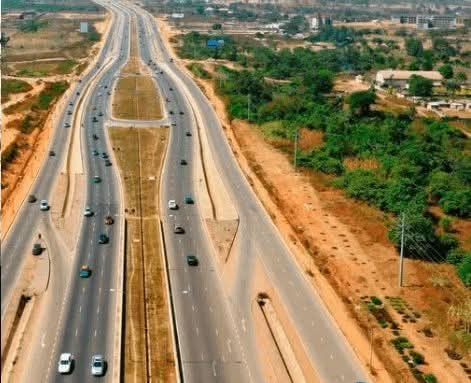
The Federal Government Wednesday disclosed that it had secured $747 million syndicated loan for the financing of phase 1, section 1 of the Lagos-Calabar coastal highway.
This is contained in a statement by Mohammed Manga, Director of Information and Public Relations at the Ministry of Finance, revealing that the financing covers the 47.47 kilometre stretch from Victoria Island to Eleko Village in Lagos.
Manga said the financing marked the first syndicated road infrastructure loan of its size in Nigeria and was a strong signal of global investor confidence in the country’s reform trajectory and infrastructure pipeline.
He said the Deutsche Bank acted as global coordinator, initial mandated lead arranger and book runner and participated in the syndicate, alongside other regional and international lenders.
The director added that the Islamic Corporation for the Insurance of Investment and Export Credit (ICIEC) provided partial political and commercial risk insurance.
Said he: “The syndicate includes support from development finance institutions, export credit agencies and international commercial banks, notably First Abu Dhabi Bank, also acting as Agent across all facilities and Intercreditor Agent, whose involvement underscores its strong and growing support for Nigeria.
“Other lenders involved the African Export-Import Bank, the Abu Dhabi Exports Office (ADEX), the ECOWAS Bank for Investment and Development (EBID), Nexent Bank N.V. (formerly known as Credit Europe Bank N.V.) and Zenith Bank (through its UK, Paris and Nigeria offices).
“The project is structured as an EPC+F (Engineering, Procurement, Construction + Financing) contract awarded to Hitech Construction Company, one of Nigeria’s leading infrastructure firms”.
Manga said the structure aimed at a strategic partnership between the government and the private sector, seamlessly aligning technical execution with financing solutions.
The statement disclosed that it enables fast-track project delivery while unlocking and maximising private sector appetite for investment in the country’s priority infrastructure.
He said the construction of phase 1, section 1 of the highway was already over 70 percent complete.
Informed the statement: “The highway, constructed using Continuously Reinforced Concrete Pavement (CRCP), reflects a commitment to long-term resilience and efficiency. Engineered for a minimum lifespan of 50 years with minimal maintenance, it offers outstanding durability and cost-effectiveness.
“The project’s design and implementation have been shaped by comprehensive technical, legal, and environmental and social assessments, ensuring alignment with the highest international standards.
“The Lagos-Calabar Coastal Highway will serve as a vital trade and logistics corridor, enhancing regional integration, tourism, reducing transport costs, and creating jobs. A tolling strategy is currently being finalised to ensure the project’s operational and financial sustainability.
“These mechanisms will support a self-sustaining, concession-backed framework, helping to ensure long-term viability. Financing for subsequent phases is already being structured, with strong interest from regional and international investors.”
Manga said the landmark transaction reflected the renewed engagement of international financial institutions with Nigeria, driven by bold macro-economic reforms and a commitment to delivering bankable, transformative projects.
Speaking on the transaction, Wale Edun, Minister of Finance and Coordinating minister of the Economy, said it reflected the success of Nigeria’s macro-economic reforms and the return of international capital to support its development.
He said the government was focused on funding infrastructure through approaches that are sustainable, transparent, and transformative, adding that the transaction exemplified the vision in action.
Said Edun: “The closing of this market-defining financing is yet another testament to Mr. President’s commitment to accelerate the participation of the private sector in infrastructure financing and development.
“It positions the country as being ready for a full transition to the design, development, financing as well as operations and management of critical public infrastructure through Public Private Partnerships.
“It signals to investors and private sector participants, the sophistication and maturity of the Nigerian market and commitment of the government to sanctity of contracts and innovative structures to fund critical national infrastructure that will deliver sustained and inclusive growth.”
David Umahi, Minister of Works, said the transaction was a vote of confidence in Nigeria’s economic reform agenda.
Said he: “The Lagos-Calabar Highway is a strategic national asset, and this financing sets a strong precedent for future public-private infrastructure partnerships.”
On his part, Dany Abboud, Managing-Director of Hitech Construction Company Limited, expressed pride in delivering the coastal highway project.
Said Abboud: “With over 70% of Phase 1 Section 1 complete, we are showing that Nigerian engineering, backed by structured international finance, can meet global standards.
“The use of CRCP technology ensures unmatched durability and cost-efficiency.”
Speaking also, Khalid Khalafalla, Chief Executive Officer of the ICIEC, expressed pride in partnering with the Nigerian government and fellow financiers to bring the Lagos–Calabar coastal highway project to fruition.
Noted he: “Through ICIEC’s sovereign risk coverage solution, we are unlocking vital infrastructure that will ease congestion, stimulate regional trade, and drive inclusive economic growth”.
Khalafalla stated that the project would generate jobs, enhance local skills, and support small and medium-sized businesses, underscoring ICIEC’s strong dedication to sustainable development, improved regional connectivity, and shared prosperity throughout West African communities.