
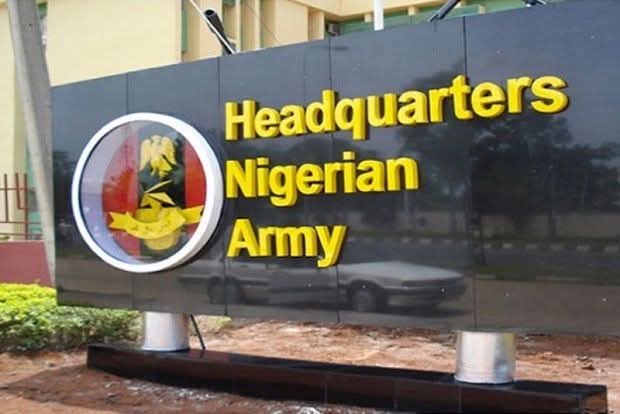
Despite worsening insecurity across the country, more than 500 senior military officers — including Major-Generals, Brigadier-Generals, Rear Admirals, and Air Vice Marshals — have been forced into early retirement following successive changes of Service Chiefs under former President Muhammadu Buhari and President Bola Tinubu.
The mass disengagements, which spanned the Army, Navy, and Air Force between 2015 and 2023, were driven by a long-standing military tradition requiring officers who are senior to or of the same course as newly appointed Service Chiefs to retire. The rule, military authorities argue, preserves discipline, hierarchy, and operational efficiency within the Armed Forces.
Data compiled from multiple reports indicate that over 500 senior officers have left the services in the last eight years. However, insiders claim the actual figure could be as high as 900, though this could not be independently verified as Defence Headquarters did not respond to requests for confirmation.
The first major wave came in July 2015, when President Buhari appointed Lt.-Gen. Tukur Buratai (Army), Air Marshal Sadique Abubakar (Air Force), and Vice Admiral Ibok-Ete Ibas (Navy) as Service Chiefs. Over 100 senior Army officers, including several Major-Generals and Brigadier-Generals, were retired, alongside more than 20 senior naval officers.
Another shake-up occurred in 2021 when Buhari replaced all Service Chiefs with Lt.-Gen. Ibrahim Attahiru, Air Marshal Isiaka Amao, and Vice Admiral Awwal Gambo. That transition saw about 123 Army Generals, 50 senior Air Force officers, and 50 naval officers exit the service.
Following Gen. Attahiru’s death later that year, the appointment of Gen. Farouk Yahaya — who was junior to many serving generals — triggered the voluntary retirement of more than 20 generals.
The trend continued under President Tinubu, who in June 2023 named Lt.-Gen. Taoreed Lagbaja, Air Marshal Hasan Abubakar, and Vice Admiral Emmanuel Ogalla as new Service Chiefs. Their appointment led to the retirement of 51 Army Generals, 49 senior Air Force officers, and 17 naval officers.
In a fresh shake-up last week, Tinubu appointed Gen. Olufemi Oluyede as Chief of Defence Staff (CDS), Maj.-Gen. Waidi Shaibu as Chief of Army Staff, Air Vice Marshal Sunday Aneke as Chief of Air Staff, and Rear Admiral Idi Abbas as Chief of Naval Staff, while Maj.-Gen. Emmanuel Undiendeye retained his position as Chief of Defence Intelligence. About 60 additional senior officers are expected to leave the service following the latest appointments.
Retired military officers have expressed divergent views on the recurring mass retirements.
Maj.-Gen. Ishola Williams (retd.) criticized the practice, describing it as “a relic of military-era governance.” He argued that the arbitrary dismissal of senior officers disrupts continuity and morale.
“Once government replaces Service Chiefs, those senior to them must go. It’s been happening for years, but it’s wrong,” Williams said. “There should be a clear succession plan, not sudden announcements.”
Conversely, Gen. Aliyu Momoh (retd.) commended President Tinubu’s restructuring, urging him to go further by dismantling entrenched “cabals” within the military.
“The President has the right to hire and fire, but he must go deeper,” Momoh stated. “Without removing the cabals—both within and outside uniform—the cycle will continue.”
Brig.-Gen. Adewinbi (retd.) defended the retirements as part of established military order.
“This tradition can’t easily change,” he said. “The President is Commander-in-Chief. What we can do is find ways to harness the experience of retired generals through reserve roles.”
Retired Group Captain Sadique Shehu, a former spokesman for the Nigerian Air Force and member of the Armed Forces Reform Committee, described the situation as “unsustainable.” He revealed that as of 2022, the Nigerian military had about 960 generals overseeing a force of just 235,000 personnel.
“The U.S., with 1.3 million troops, has about 900 generals. We have nearly the same number with less than a fifth of their manpower,” Shehu said. “This rank inflation is wasteful and fuels mass retirements whenever new chiefs are appointed.”
Shehu attributed the problem to poor manpower planning, political interference, and weak legislative oversight. He urged the National Assembly to legislate clear criteria for the appointment and tenure of Service Chiefs to curb instability.
While some experts view the retirements as disruptive, others insist they are part of the military’s natural cycle.
Maj.-Gen. Lasisi Abidoye (retd.) explained that the pyramid structure of the military inevitably filters officers through retirement.
“Routine retirement is good for the military,” he said. “It prevents stagnation and ensures fresh leadership.”
Similarly, Maj.-Gen. P.J.O. Bojie (retd.), a former Director at the Defence Intelligence Agency, dismissed public concern, describing the process as “normal and routine.”
“It’s standard practice and part of maintaining military discipline,” he said.
.