
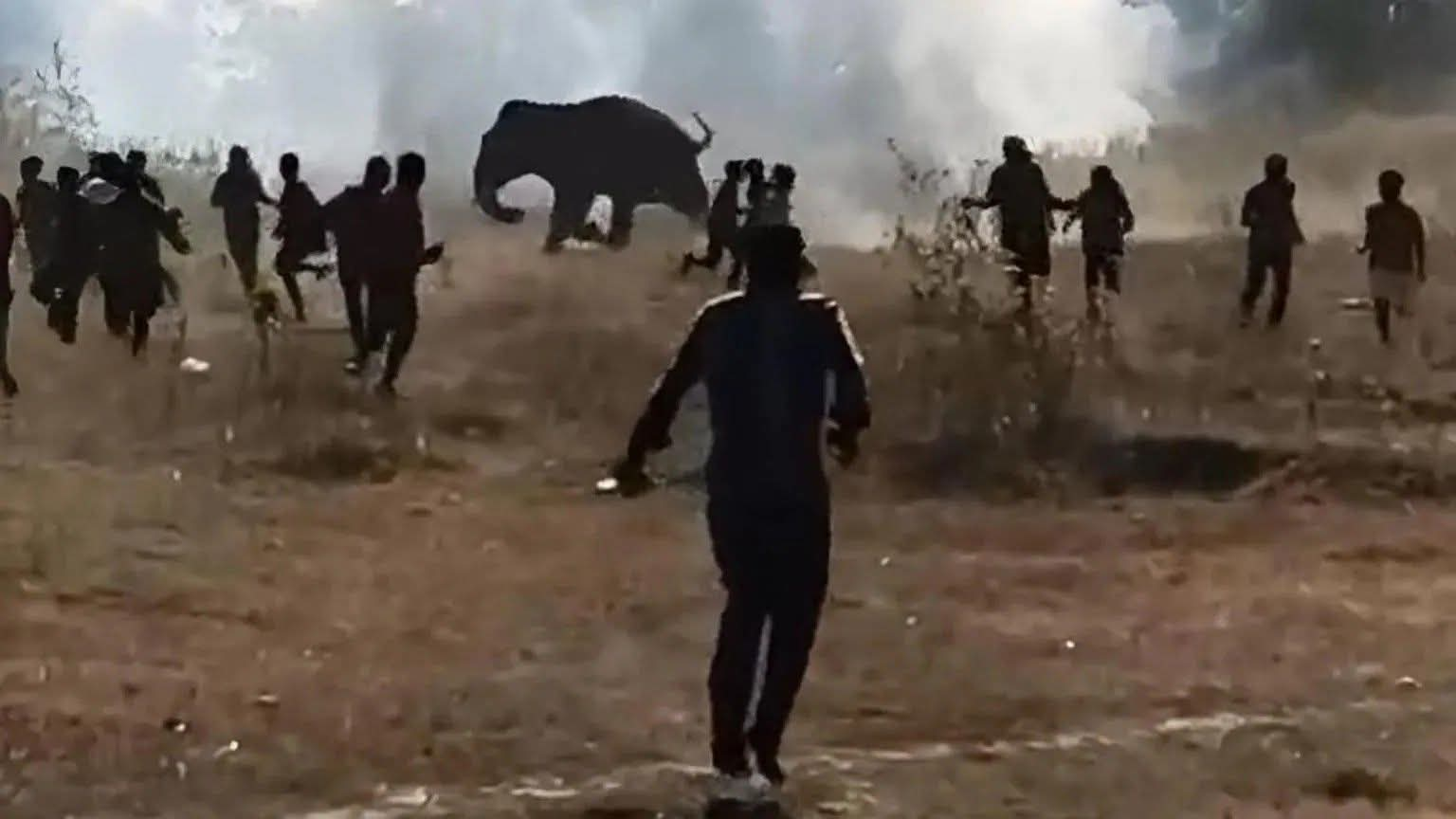
Indian authorities report that at least 20 people die over nine days due to wild elephants in the eastern Indian state of Jharkhand. The elephants remain uncaptured. /BBC
Indian authorities report that at least 20 people die over nine days due to wild elephants in the eastern Indian state of Jharkhand. The elephants remain uncaptured. /BBC
A wild elephant has attacked residents, killing at least 22 people, shocking Indian society. Authorities are currently tracking the “killer elephant.”
According to British BBC and others on the 17th, the fatal incidents began on the 1st in the Chaibasa and Kolhan forest areas of West Singhbhum district in eastern India’s Jharkhand State.
The male elephant, estimated to be relatively young with only one tusk, trampled a 35-year-old man to death on the 1st.
The elephant has roamed through multiple villages in the region’s forested areas, attacking residents, with a total of 22 victims confirmed so far. It reportedly targeted residents guarding rice fields or barns at night in small villages to prevent rice theft. Authorities plan to provide monetary compensation to the bereaved families.
The region is one of Asia’s largest sal tree forests. The BBC explained, “Conflicts between humans and elephants have been reported here for years,” adding, “Officials and researchers link the causes to reduced forest area, habitat fragmentation, and increased human activity near elephant migration routes.”
Jharkhand State authorities have issued an elephant emergency alert, urging residents to avoid nighttime outings or entering forests, while deploying over 100 personnel for a large-scale search operation.
Local forest authorities attempted to tranquilize the elephant three times but failed and plan to resume efforts. However, tracking has been challenging due to the elephant’s youth, agility, and nocturnal movements.
Authorities suspect the elephant, in musth—a period of heightened aggression—may have separated from its herd and become extremely violent.
Forest Director Kuldip Mina stated, “This is unprecedented. A single male elephant causing so many deaths here is a first,” adding, “The priority is to track, capture, and safely release it back into the wild.”
He explained, “The elephant is likely in musth. Males experience heightened aggression due to increased testosterone during this phase, which typically subsides within 15–20 days.” He added, “It may have left its herd. We must locate it and help it rejoin others in the forest.”