
Court Affirms Nigerians’ Right to Record Police, Declares Anonymous Policing Unconstitutional
Court Affirms Nigerians’ Right to Record Police, Declares Anonymous Policing Unconstitutional
A Federal High Court sitting in Delta State has delivered a landmark judgment affirming that Nigerians have the constitutional right to record police officers during stop-and-search operations in public places.
The ruling was handed down on Tuesday by Justice Hyeladzira Nganjiwa in a fundamental rights enforcement suit filed by lawyer Maxwell Nosakhare Uwaifo.
Court Takes Stand on Police Accountability
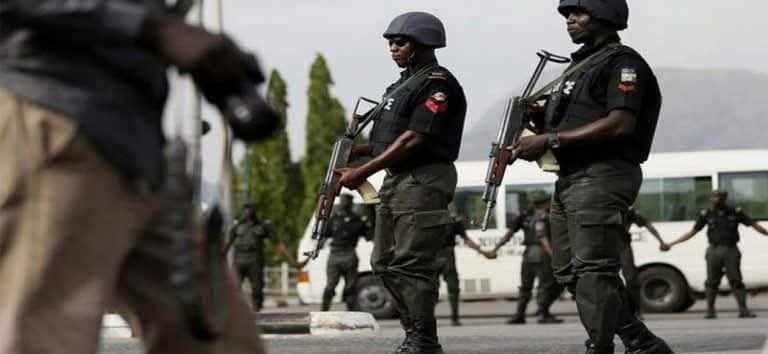
In his judgment, Justice Nganjiwa made far-reaching pronouncements on police conduct, declaring that “anonymous policing is unconstitutional.” He ruled that officers must wear clearly visible identification, including name tags and force numbers, while carrying out duties in public.
The court further held that citizens are fully entitled to record law enforcement officers performing their duties in public spaces. It emphasised that any attempt by officers to harass, intimidate, arrest, or seize devices from individuals for recording them is unlawful.
Origin of the Case
The suit stemmed from an incident involving Uwaifo on May 10, 2025, at Sapele Roundabout while he was travelling from Benin to Warri.
According to the lawyer, he was stopped by officers who allegedly acted aggressively and appeared to be engaging in extortion. When he attempted to document the encounter using his phone, one of the officers reportedly threatened him and demanded he stop recording.
Uwaifo told the court that the officers did not wear name tags, failed to identify themselves, and operated from an unmarked black Toyota Sienna without any official markings or registration details.
He described the encounter as intimidating, stating that he felt compelled to comply out of fear of being assaulted, arrested, or having his phone seized.
Legal Arguments and Reliefs Sought
The applicant argued that under Section 39 of the 1999 Constitution, Nigerians have the right to freedom of expression, which includes documenting public activities of law enforcement officers.
He also asked the court to restrain police personnel from conducting operations without proper identification and from interfering with citizens who record them.
Damages Awarded
In its ruling, the court awarded ₦5 million in damages for the violation of Uwaifo’s fundamental rights, along with ₦2 million as the cost of litigation.
The respondents in the suit included the Nigeria Police Force, the Police Service Commission, the Inspector-General of Police, and the Attorney-General of the Federation.
While the police were not represented during proceedings, the Attorney-General’s office was represented by legal counsel.
Implications of the Judgment
Legal analysts say the ruling strengthens citizens’ rights and reinforces accountability within the policing system. It is also expected to serve as a precedent in cases involving police misconduct and public transparency.
The decision has been widely viewed as a significant step toward promoting lawful policing practices and protecting Nigerians from harassment during routine law enforcement operations.