
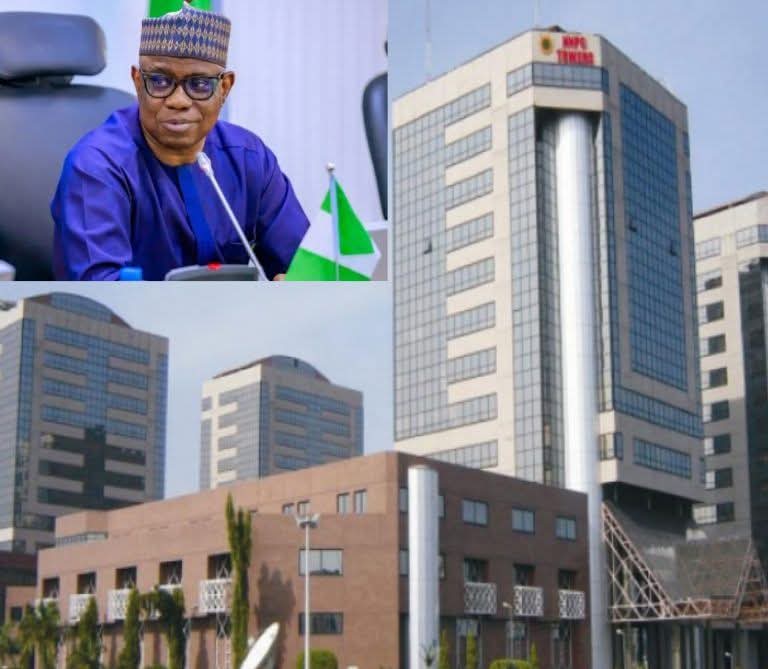
After squandering a controversial $2.39 billion to rehabilitate failed refineries under the previous administration,
the Nigerian National Petroleum Company Limited (NNPCL) has again entered into a fresh agreement with two Chinese firms in a renewed bid to revive Nigeria’s troubled refining sector.
The state-owned oil company signed a Memorandum of Understanding (MoU) with Sanjiang Chemical Company Limited and Xingcheng (Fuzhou) Industrial Park Operation and Management Co. Ltd to explore a Technical Equity Partnership (TEP) for the completion and long-term operation of the Port Harcourt and Warri refineries.
The agreement was formalised in Jiaxing City, China, on April 30, 2026, with NNPCL’s Group Chief Executive Officer, Engr. Bashir Bayo Ojulari, signing alongside the chairmen of the two partner firms, Guan Jianzhong and Bill Bi.
According to NNPCL’s Chief Corporate Communications Officer, Andy Odeh, the partnership is expected to support the restart, optimisation, and expansion of Nigeria’s key refining assets.
The move comes amid lingering questions over the effectiveness of previous rehabilitation efforts, which gulped billions of dollars but yielded limited results.
The Port Harcourt refinery, which reportedly resumed production in November 2024 after a $1.5 billion overhaul approved by the Federal Executive Council, was shut down again after just six months of operation.
Similarly, the Warri refinery, which received a share of the $1.48 billion approved for the rehabilitation of both Warri and Kaduna plants in 2021, has yet to deliver meaningful output despite phased repair timelines spanning over six years.
At the time, former Minister of State for Petroleum Resources, Timipre Sylva, had assured Nigerians that the projects would restore refining capacity and reduce dependence on imported petroleum products.
Meanwhile, industry observers have criticised the lack of transparency and accountability surrounding the rehabilitation contracts, particularly given the continued dormancy of the facilities.
In a statement seen by NATIONAL WAVES, Ojulari described the new MoU as a “significant milestone” after more than six months of engagement between NNPCL and its prospective Chinese partners.
He noted that the collaboration would focus not only on refining but also on developing co-located petrochemical and gas-based industries to improve commercial viability.
“All parties recognise mutually beneficial opportunities for the development and long-term sustainable profitability of NNPC’s refining assets,” he said.
Despite the optimism, NNPCL did not disclose the financial implications of the new agreement, a development that may further fuel public scrutiny over the management of Nigeria’s oil infrastructure.