
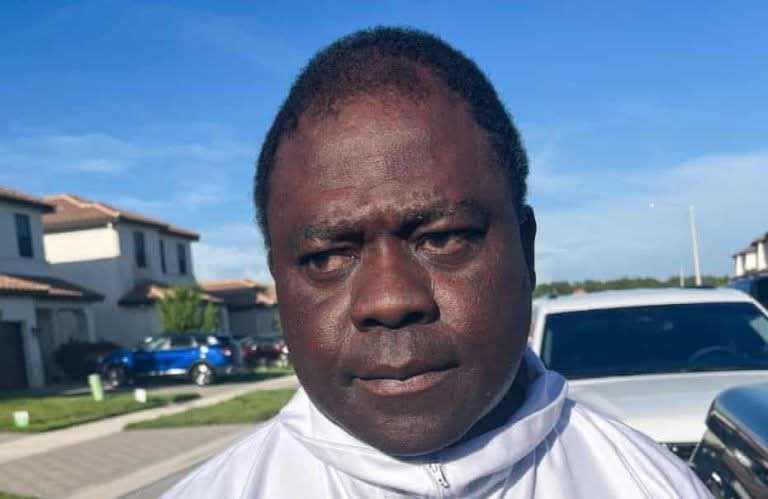
A Nigerian-born Catholic priest, Father Anthony Odiong, has been convicted by a jury in Texas, United States, on multiple sexual assault charges after prosecutors argued that he exploited his position as a spiritual leader to abuse women under his pastoral care.
The verdict was delivered on Friday at the 19th State District Court in Waco, Texas, following a high-profile trial that drew national attention within both religious and legal circles. Odiong, 57, was found guilty on one count of first-degree sexual assault and two counts of second-degree sexual assault involving two women who testified that the priest manipulated their religious trust and emotional vulnerability.
The jury, made up of eight women and four men, reportedly deliberated for about two hours before reaching the unanimous verdict. Judge Thomas West is expected to begin sentencing proceedings on Monday, with the former priest facing the possibility of life imprisonment on the first-degree charge and up to 20 years on the additional counts.
DIC Materials Limited Management
According to prosecutors, the case centered not on physical force but on the abuse of spiritual authority. Texas law classifies sexual relationships between clergy and individuals under their spiritual guidance as felony sexual assault when there is evidence of exploitation tied to counseling or religious influence.
Lead prosecutor Ryan Calvert told jurors that Odiong’s “weapon was faith,” arguing that the priest preyed on women who approached him during periods of emotional distress, divorce, illness, or family struggles. Prosecutors maintained that the relationships were not consensual in any meaningful sense because of the significant power imbalance created by his role as a Catholic priest.
Court testimony detailed allegations involving women identified under pseudonyms such as “Mary Doe” and “Jane Doe.” One woman testified that her relationship with Odiong began in 2008 while she was dealing with a painful divorce and raising seven children. Prosecutors said the sexual relationship lasted several years and was rooted in what they described as manipulative spiritual counseling.
Another woman testified that Odiong inserted himself deeply into her troubled marriage while allegedly demanding intimate details of her personal life under the guise of pastoral guidance. Prosecutors argued that the conduct reflected a broader pattern of manipulation rather than isolated incidents.
One of the trial’s most damaging moments involved DNA evidence showing that Odiong fathered a child with another parishioner in Louisiana while serving in ministry there. Prosecutors used the evidence to reinforce claims that the priest repeatedly pursued inappropriate sexual relationships with women who sought his spiritual assistance.
Defense attorneys Gerald Villarial and Carolina Truesdale argued that the relationships were consensual and insisted the women involved acted independently. The defense also challenged the prosecution’s interpretation of the evidence and questioned why some allegations surfaced years later.
However, prosecutors countered that the delayed reporting was common in cases involving religious authority and emotional manipulation, particularly where victims feared shame, judgment, or disbelief.
Odiong, originally ordained in Nigeria in 1993 under the Diocese of Uyo, later relocated to the United States, where he served in multiple Catholic parishes in Texas and Louisiana. Church records presented during the trial indicated that concerns regarding his conduct had existed for years before criminal charges were eventually filed.
The Diocese of Austin reportedly barred him from ministry in 2019 following complaints involving adult women, but he later continued ministry work in Louisiana before public allegations intensified. He was eventually suspended from ministry in New Orleans in 2023.
The conviction has renewed wider debate within the Catholic Church over how clergy abuse involving adults under spiritual direction should be handled. Advocacy groups have increasingly pushed for reforms that recognize the unique vulnerability of individuals who seek emotional and religious guidance from priests and other religious leaders.
The case has also intensified scrutiny over whether church authorities acted quickly enough after receiving complaints regarding Odiong’s behavior.
With the guilty verdict now secured, attention shifts to the sentencing phase, where the court will determine the punishment in one of the most prominent clergy sexual abuse convictions involving a Nigerian-born priest in the United States in recent years.