
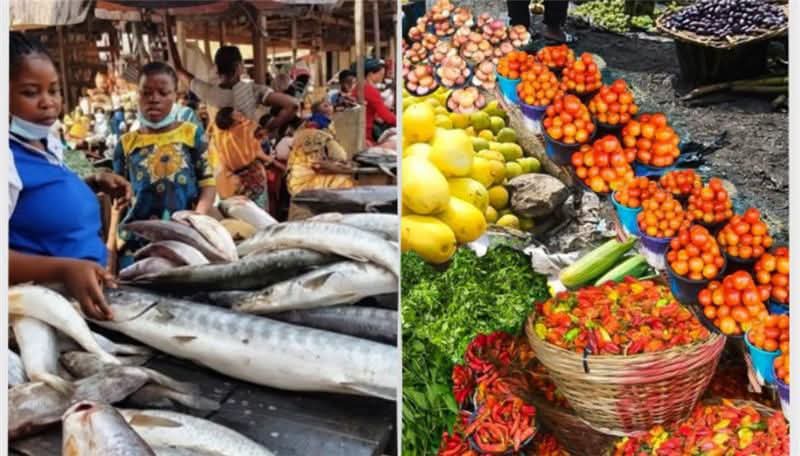
Food prices across major Lagos markets recorded another mixed trend in June 2026, as improved supplies of some staples moderated prices while seasonal shortages pushed up the cost of key perishables.
The most recent Nairametrics market survey covering Mushin, Daleko, Mile 12 and Oyingbo markets tracked the prices of 66 staple food items and revealed that 26 items recorded price increases in June, marginally lower than the 27 items that increased in May.
Meanwhile, 17 items recorded price declines, the same number as in the previous month, while 23 items remained unchanged, indicating that a sizeable portion of the market shows signs of stabilizing after several months of volatility.
What traders are saying
Across the four markets surveyed, traders said June felt relatively steady, though with a sense of caution.
“Customers are negotiating more than before. Even when prices increase, we cannot raise them too much because people simply won’t buy them.”
A frozen food merchant at Mushin Market added:
“Sales have improved slightly because turkey and chicken are cheaper now, but people are still buying smaller quantities, while Titus fish is on the high side making it very difficult for people to purchase.”
According to tomato wholesalers at Mile 12 Market, June coincided with a seasonal decline in supplies from major producing states as many farmers transition between harvest cycles.
“The pepper and tomatoes coming into Lagos are fewer this month. The rains have also affected harvesting and transportation from the North, so prices naturally went up,” a trader at Mile 12 told Nairametrics.
A trader at Daleko Market noted that the improved supply of imported goods helped ease the pressure on prices.
“Supply is better now for rice, vegetable oil and frozen foods. Importers are bringing in more goods, so prices have started adjusting.”
Items that witnessed price increase
Fresh produce accounted for most of the notable price increases recorded during the month, with fish, tomatoes, pepper and soup ingredients posting the sharpest gains.
Titus (Mackerel) fish posted the steepest increase, rising by 92.86% from N7,000 in May to N13,500 per kilogram in June. Traders explained that the surge was driven by a drop in imports, rising costs in cold-chain logistics, and stronger demand from consumers.
Round-shaped tomatoes also recorded a significant increase, climbing from N60,000 to N90,000 per big basket, while oval-shaped tomatoes rose from N38,000 to N55,000.
Sweet potatoes also witnessed a notable increase, rising from N24,000 to N35,000 per big basket.
Pepper continued its upward trend, with medium bags increasing from N80,000 to N100,000, while big bags rose from N110,000 to N125,000.
Egusi increased from N320,000 to N360,000 per big bag (12.50%), while ogbono rose moderately from N300,000 to N310,000.
Processed food items, including PowerOil (2.6 liters), Honeywell semovita, wheat flour, Bournvita, Ovaltine, eggs and Ayoola poundo yam flour, posted moderate increases as producers continued to grapple with higher operating costs.
Market participants said the increases were largely driven by rising production costs, seasonal supply challenges, and steady demand that has remained strong despite a slowdown in consumer spending.
Items that recorded price declines
While several fresh food items became more expensive, some became cheaper across a number of household staples.
Turkey recorded one of the biggest declines of 13%, falling from N100,000 to N87,000 per carton.
Yellow garri also became cheaper, dropping from N25,000 to N22,000 per 50kg bag, a 12% decline.
Mama’s Pride long-grain rice declined from N65,000 to N60,000, while Royal Stallion short-grain rice fell slightly from N53,000 to N52,000.
Dry onions also recorded a moderate decline, dropping from N80,000 to N75,000 per big bag as fresh supplies entered Lagos markets.
A 12.5kg refill declined from N26,250 to N25,000, while a 5kg refill eased from N10,500 to N10,000.
Notably, vegetable oil prices continued the downward trend that began in April, as Kings vegetable oil (5 litres), local vegetable oil (5 litres and 25 litres), mamador oil and local palm oil all recorded price reductions.
The survey also showed that 23 food items maintained the same prices recorded in May, reflecting improving stability across several household staples. The unchanged items include selected noodles, pasta, beans, garri, milk products and other packaged foods, suggesting that traders are increasingly finding equilibrium between supply and consumer demand.
More Insight
The latest survey indicates that although inflationary pressures persist across some food categories, improved harvests, increased harvest arrivals and relatively stable transportation costs have helped contain broader price increases in June.
According to NBS, Nigeria’s headline inflation rose to 15.93% in May 2026, up from 15.69% in April, while the food inflation rate eased to 16.96%, indicating a gradual easing in the speed of price increases.
The NBS attributed movements in food prices to changes in the cost of products such as fresh onions, maize, egusi, water yam, cassava flour, crayfish, fresh pepper, tomatoes, wheat grain, yam tubers, sweet potatoes, ginger, plantain, and cowpea.
Lagos, Nigeria’s largest commercial city and biggest food consumption hub, continues to experience stronger price swings than many other states because of its heavy dependence on agricultural supplies transported from across the country.