
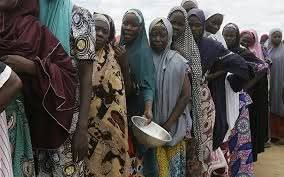
Nigeria has emerged with the world’s largest population of people living in extreme poverty, with an estimated 73.1 million citizens affected, according to 2026 figures attributed to World Data Lab’s World Poverty Clock.
The figure puts Nigeria narrowly ahead of the Democratic Republic of Congo (DR Congo), which has an estimated 71.6 million people living in extreme poverty, leaving a difference of just 1.5 million between the two countries.
Afghanistan ranks third with 35.2 million people, less than half Nigeria’s figure, while Mozambique and Yemen occupy the fourth and fifth positions with 25 million and 24.2 million respectively.
The figures underscore the scale of extreme poverty in Nigeria and the concentration of the problem across Africa, which accounts for seven of the 10 countries on the list.
Top 10 countries by extreme-poverty population
According to the figures attributed to World Data Lab, the 2026 ranking is as follows:
1. Nigeria — 73.1 million
2. DR Congo — 71.6 million
3. Afghanistan — 35.2 million
4. Mozambique — 25 million
5. Yemen — 24.2 million
6. Tanzania — 23.9 million
7. Madagascar — 20.1 million
8. Uganda — 18.2 million
9. India — 14.46 million
10. Ethiopia — 14.3 million
Nigeria and DR Congo occupy the top two positions, while Afghanistan, Yemen and India are the only countries outside Africa represented in the top 10.
The World Poverty Clock uses economic and demographic data to estimate poverty levels across countries, updating its projections as new information becomes available. Its underlying data draw on recognised institutions, including the World Bank, the International Monetary Fund and the United Nations.
Nigeria leads in numbers, not necessarily poverty rate
Nigeria’s position at the top of the ranking requires an important distinction: having the largest number of people living in extreme poverty does not necessarily mean having the highest proportion of poor people.
The country’s large population means that the absolute number of people living below the extreme-poverty threshold can exceed that of smaller countries, even where a greater percentage of their populations are affected.
The World Poverty Clock figures put Nigeria’s extreme-poverty population at approximately 73.1 million, equivalent to about 31 per cent of its population.
This distinction is important because poverty statistics from different institutions often measure different forms of deprivation and use different thresholds.
Why the 73.1m figure differs from Nigeria’s 133m poverty estimate
Nigeria’s latest extreme-poverty estimate should not be confused with the 133 million people the National Bureau of Statistics identified as multidimensionally poor in its 2022 National Multidimensional Poverty Index report.
The two figures measure different things.
While the World Data Lab estimate focuses on extreme monetary poverty, the NBS multidimensional poverty measure captures overlapping forms of deprivation, including inadequate access to healthcare, education and acceptable living standards, as well as other indicators of household wellbeing.
Consequently, the two figures cannot be directly compared as though they measure the same category of poverty.
The international poverty threshold has also changed. In June 2025, the World Bank revised its extreme-poverty line from $2.15 per person per day, based on 2017 purchasing-power parities, to $3 per person per day using 2021 purchasing-power parities.
The revision resulted in substantial changes to global poverty estimates, including the number of people classified as living in extreme poverty.
Comparisons across countries and years therefore require careful consideration of the poverty threshold, purchasing-power methodology, reference period and type of deprivation being measured.
Africa bears the heaviest burden
The concentration of countries on the list highlights the scale of the poverty challenge across sub-Saharan Africa.
Nigeria, DR Congo, Mozambique, Tanzania, Madagascar, Uganda and Ethiopia are all among the world’s 10 countries with the largest extreme-poverty populations.
The World Bank has repeatedly identified sub-Saharan Africa as a region where extreme poverty is increasingly concentrated. Following its 2025 revision of the international poverty line, the Bank estimated that methodological changes alone added approximately 111 million people to the region’s extreme-poverty count.
Nigeria’s position in the latest ranking must therefore be viewed within the wider regional context, even as its absolute number of people affected sets it apart.
For Nigeria, the figures raise questions about how effectively economic growth, government revenue and other macroeconomic gains are translating into improved living conditions for ordinary citizens.
Although indicators such as GDP growth, inflation and market performance provide important measures of economic activity, they do not, on their own, establish how widely the benefits of economic progress are distributed.
With an estimated 73.1 million Nigerians living in extreme poverty, the scale of the challenge remains substantial.
