
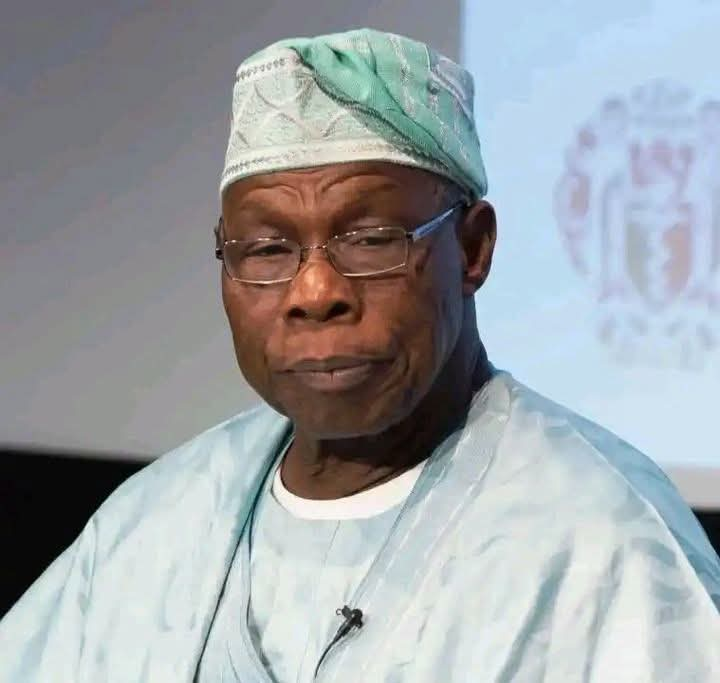
Former President Olusegun Obasanjo has raised concerns over the sharp increase in Nigeria’s debt, recalling how a $36 billion debt burden once troubled him during his presidency, while warning that the country now faces a $147 billion obligation that must eventually be repaid.
Obasanjo recalled that he was worried about Nigeria’s $36 billion debt while serving as president, describing it as a major financial burden. He noted that the country’s debt had since increased to $147 billion, warning that the money borrowed would eventually have to be repaid.
The former president also recalled that Nigeria was spending $3.6 billion on debt servicing during his administration, despite the country’s overall debt not reducing.
According to him, the situation troubled him because the substantial amount spent on servicing the loans was not translating into a reduction in the outstanding debt.
Obasanjo made the remarks in a video shared by Channels Television, where he discussed Nigeria’s debt burden and reflected on the financial concerns he faced while in office.
Speaking about the difference between the country’s debt during his presidency and the figure he cited for today, he said, “When I was president, I was worried about a debt of $36 billion hanging over Nigeria. Today, we have a debt of $147 billion, and you will have to pay. What worried me then was that we were spending $3.6 billion to service our debt, yet it wasn’t going down.”
His remarks highlighted his concern about both the size of Nigeria’s debt and the resources required to service it. He explained that even when the debt stood at $36 billion, the financial demands of meeting repayment obligations were already troubling his administration.
Obasanjo’s recollection also drew attention to the challenge of spending substantial public funds on debt servicing without achieving a reduction in the country’s outstanding obligations.
By comparing the figures, the former president warned about the financial responsibility attached to borrowing, stressing that the $147 billion debt he cited would eventually have to be repaid.
His comments underscored the importance of considering repayment obligations when governments take loans, as such commitments remain a responsibility that the country must meet.
The former president’s comparison was based on his experience managing Nigeria’s finances and his concern over the amount spent on servicing the country’s debt during his time in office
