
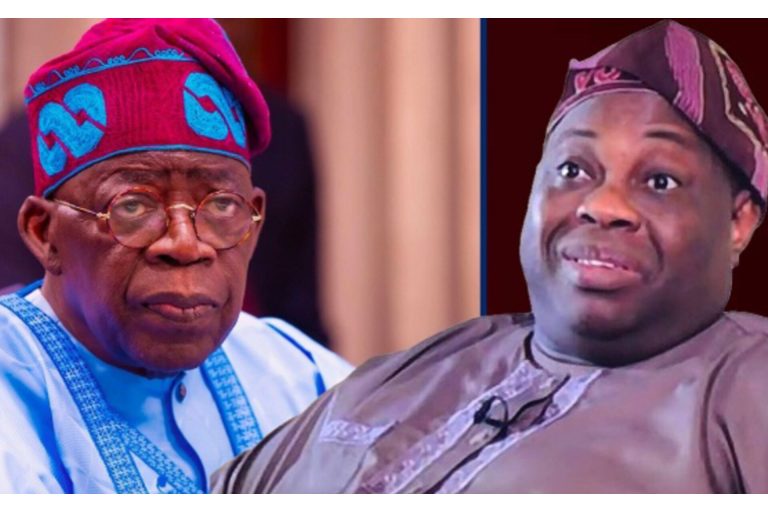
A chieftain of the African Democratic Congress (ADC), Dele Momodu, has attributed growing public dissatisfaction with President Bola Tinubu to the economic hardship Nigerians have experienced since the removal of petrol subsidy, warning that the administration’s economic policies could carry serious political consequences in the 2027 elections.
Momodu, Deputy Director-General of Media and Communications of the ADC Presidential Campaign Council, said Nigerians were rejecting the President because they could feel the effects of the government’s policies in their daily lives.
The publisher and former Peoples Democratic Party presidential aspirant made the remarks during an appearance on Channels Television on Wednesday night.
He argued that the government failed to adequately consider the consequences of subsidy removal before implementing the policy, insisting that the burden had fallen disproportionately on ordinary Nigerians.
Using a medical analogy, Momodu compared the country’s economic condition to that of a patient who received an injection but remained in a coma for almost four years.
He said the growing frustration was becoming increasingly visible wherever Tinubu appeared.
“That’s what is happening in Nigeria. And that is why you can see that everywhere Tinubu goes now, he is being rejected by the people. The people are not stupid; they are rejecting him because they can feel the pain,” he said.
Momodu also accused the President of failing to demonstrate sufficient sensitivity to the economic difficulties facing ordinary citizens.
He questioned government spending priorities, arguing that substantial resources were being committed to other expenditures while critical sectors, including healthcare, education and security, remained inadequately funded.
The ADC chieftain maintained that the subsidy crisis could have been handled differently, accusing the government of making the entire population bear the consequences of alleged misconduct by a relatively small number of individuals.
“We’ve since discovered that this subsidy issue could have been better handled because, if you look at it, the people who are at fault are probably less than 1,000 people, and now you are punishing over 200 million Nigerians because of the sins of a few people,” he said.
He further questioned the government’s spending decisions, arguing that a leadership genuinely concerned about citizens’ hardship should demonstrate restraint and share in the sacrifices demanded of the population.
Momodu questions economic recovery claims
The publisher also challenged positive assessments of Nigeria’s economic reforms by international financial institutions, including the World Bank and International Monetary Fund (IMF).
He argued that favourable macroeconomic assessments meant little to ordinary Nigerians if they were not translating into improved living conditions.
“The world is praising us; the World Bank is praising us; the IMF is saying we are doing well. Whenever the IMF or World Bank is interested in your case, then something is wrong. You can see clearly that everything you can say is not affecting our people positively. Nigerians are suffering, and that’s just the truth,” he said.
Momodu also accused the Tinubu administration of covertly restoring fuel subsidy payments, although he did not provide supporting evidence for the allegation during the reported interview.
The subsidy controversy remains central to the debate over the administration’s economic reforms.
Tinubu announced the removal of petrol subsidy during his inauguration on May 29, 2023, arguing that the arrangement had become financially unsustainable.
The decision, alongside the unification of the foreign exchange market, triggered significant adjustments in petrol prices, transportation costs and the general cost of living.
The administration has defended the reforms as necessary to improve public revenue, reduce fiscal distortions and strengthen the economy’s long-term prospects.
Supporters of the policies, including Imo State Governor Hope Uzodimma and former Minister of Works and Housing Babatunde Fashola, have argued that retaining the subsidy would have placed further pressure on government finances.
Economic hardship enters 2027 political debate
With the 2027 general elections approaching, the economic consequences of the reforms have become an increasingly prominent issue in the contest between the ruling All Progressives Congress (APC) and opposition parties.
Recent public discontent has also been reflected in reported confrontations during presidential movements, including incidents in which protesters allegedly threw stones at Tinubu’s convoy and destroyed APC campaign posters, prompting security intervention.
The ADC has rejected allegations that it is sponsoring protests against the President, maintaining that Nigerians are independently expressing their dissatisfaction with the administration.
Momodu’s comments reinforce the opposition party’s emerging political argument that economic performance and the everyday experiences of citizens will be major considerations in the 2027 electoral contest.
However, the extent to which public frustration translates into electoral decisions will depend on several factors, including the opposition’s ability to present a credible alternative and the government’s capacity to demonstrate measurable improvements in living conditions before the elections.
