
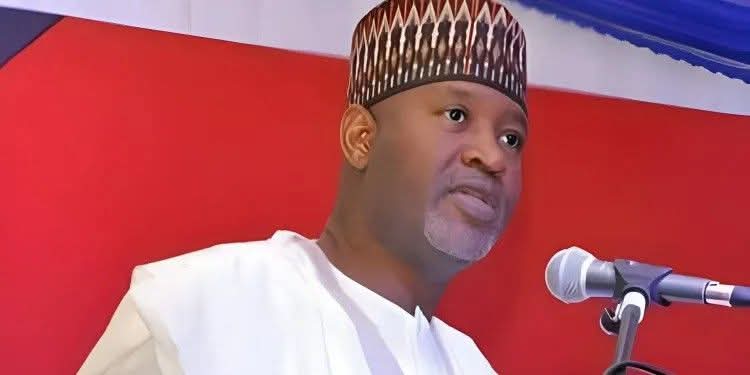
Nigerian journalist and social critic Dan Bello has faulted the appointment of former Aviation Minister Hadi Sirika as the Pro-Chancellor and Chairman of the Governing Council of Umaru Musa Yar’Adua University, Katsina.
In a viral video titled “Nigeria Air Minister, Hadi Sirika is now a University Chancellor”, Bello questioned the government’s decision to reward what he described as “failure and impunity” with another position of honour.
“The man who once gave us Nigeria Air—the most expensive borrowed airplane in world history—is now in charge of a university,” he said. “Education in Nigeria is now under turbulence.”
Bello recalled how, in May 2023, Sirika unveiled a Nigeria Air aircraft which was later revealed to have been chartered from Ethiopian Airlines and returned to Addis Ababa days later. He likened the episode to “makeup on a corpse”, saying it symbolised the government’s penchant for grand deception.
“Now, this same man, this modern-day aviation Picasso, has been chosen to teach our youth integrity and leadership,” Bello said. “In Nigeria, failure is not punishment; it’s promotion.”
He lamented what he called a “culture of recycling corruption”, noting that such appointments demoralise students, lecturers and citizens who still believe in merit and accountability.
Sirika, who served as Aviation Minister between 2019 and 2023 under former President Muhammadu Buhari, is currently facing trial by the Economic and Financial Crimes Commission (EFCC) over alleged N2.8 billion contract fraud linked to companies owned by his daughter and son-in-law.
The former minister has denied wrongdoing, insisting that only about N3 billion was released for the controversial Nigeria Air project and that all procedures followed due process.
Lawmakers and aviation stakeholders, however, had described the 2023 unveiling of Nigeria Air as a “fraudulent publicity stunt” after it emerged that the aircraft displayed in Abuja belonged to Ethiopian Airlines and was not part of any operational national carrier.
Bello’s criticism adds to the growing public debate over what many see as the government’s habit of rewarding controversial figures with new appointments despite unresolved allegations.
.
About the Author