
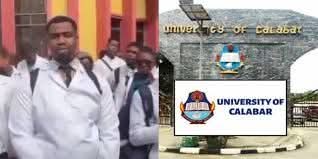
The Nigerian education system has once again been thrown into disarray following the recent withdrawal of the Dentistry Department’s license at the University of Calabar (UNICAL). This shocking development has left over 300 students stranded, many of whom have spent the last seven years pursuing a degree that now holds no value. For these students, the announcement feels like a death sentence to their academic ambitions and career dreams.
At the heart of the crisis is the blatant violation of admission quotas. The regulatory body approved only 40 slots per year for the Dentistry program, yet under the current Vice Chancellor’s administration, the university reportedly admitted up to 900 students illegally over several years. This gross over-enrollment, allegedly driven by greed and poor leadership, has now cost hundreds of students their future in dentistry, raising questions about the competence and integrity of university management across the country.
The National Universities Commission (NUC) and other accreditation bodies have strict guidelines for professional programs like Medicine, Dentistry, Pharmacy, and Law. These rules are designed to ensure quality control, adequate training facilities, and standardized professional outputs. By deliberately ignoring the 40-student annual quota, the University of Calabar’s management not only broke these rules but jeopardized the lives and careers of hundreds of unsuspecting students and their families.
For the affected students, the emotional and psychological toll is devastating. Many of them sacrificed time, money, and effort, enduring the typical struggles of Nigerian university life, poor infrastructure, strikes, and academic pressure only to be told, seven years later, that their course no longer exists. Some have been advised to “learn a trade” or switch careers, a recommendation that feels like a cruel insult after years of academic commitment.
This is not an isolated incident. Across Nigeria, the rot in the education system continues to manifest through poor regulation, greed-driven admissions, lack of transparency, and systemic corruption. Students are forced to battle through multiple layers of struggle from passing JAMB, navigating chaotic admissions, to dealing with accreditation uncertainties that might come back to haunt them years later. It is a cycle of trauma that destroys dreams and diminishes the value of education itself.
Public reactions to the University of Calabar’s scandal have been intense, with many calling for the Vice Chancellor and university management to be held accountable. Critics argue that the school authorities knew the admission quota but chose to breach it deliberately, likely to generate internal revenue through illegal admissions and acceptance fees. Observers are now questioning why there was no contingency plan and why the excess students were not redirected to related programs like Biology, Chemistry, or Agriculture if the quota had already been filled.
This crisis has sparked a national conversation about the urgent need for education reform. Many Nigerians believe that a state of emergency should be declared in the education sector to address not only corruption but also negligence, poor regulation, and the unchecked commercialization of higher education. The pattern of greed-driven decisions by school authorities is becoming all too common, while regulatory bodies seem unable or unwilling to enforce accountability.
Similar cases have occurred before, with little or no consequences. In the early 2010s, students of the Federal University of Agriculture Abeokuta (FUNAAB) faced a comparable dilemma when some of their programs were found to lack proper accreditation. Promises were made, panels were set up, but nothing changed. The victims were left to fend for themselves, and the system continued on its dysfunctional path.
Parents and guardians of the affected UNICAL students are also expressing outrage. Many have spent millions of naira paying school fees, accommodation costs, textbooks, and other academic expenses, believing their children were working toward professional degrees. Now they must come to terms with the fact that their investment has been wasted due to administrative recklessness.
Professional associations and civil society organizations have also weighed in, demanding that the Federal Ministry of Education, the National Universities Commission (NUC), and the Medical and Dental Council of Nigeria (MDCN) step in immediately to resolve the situation. Many are calling for the introduction of automatic migration of excess students to accredited programs as part of institutional policy reforms to prevent future occurrences.
At its core, this scandal reflects the broader decay in Nigeria’s educational framework. Corruption, lack of foresight, and reckless disregard for student welfare are gradually eroding public confidence in higher education. If these issues are not urgently addressed, more universities may fall into similar traps, and countless Nigerian youths will continue to pay the price.
For the 300-plus students of UNICAL’s Dentistry Department, this moment is more than a personal tragedy; it is a national disgrace that calls for swift justice, institutional reforms, and a renewed commitment to protecting the dreams of Nigeria’s future professionals.
About the Author