
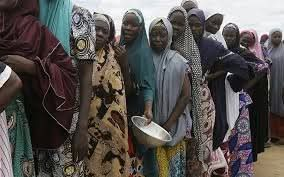
An estimated 33.5 million Nigerians, including internally displaced persons (IDPs), are projected to face acute food insecurity between June and August 2027, with conflict-hit northern states expected to experience some of the worst hunger conditions.
The projection, contained in the October 2026 Cadre Harmonisé (CH) Food and Nutrition Insecurity Analysis report, covers 26 states and the Federal Capital Territory (FCT), indicating a worsening food security outlook.
The report also estimated that 26.8 million people, including 756,815 IDPs in Borno, Sokoto and Zamfara states, would experience crisis-level food insecurity or worse between October and December 2026.
However, the number is projected to rise to 33.5 million between June and August 2027, with 891,228 internally displaced persons in the three states expected to be affected.
The analysis identified conflict and insecurity, displacement, rising fuel prices, climate shocks and high food inflation as major drivers of the worsening situation.
It listed Borno, Yobe, Adamawa, Katsina, Zamfara and Sokoto among the states facing the most severe food consumption challenges.
Beyond food shortages, the report warned that inadequate dietary intake, declining purchasing power, disease outbreaks, insecurity and limited access to healthcare, clean water and sanitation could worsen acute malnutrition.
Children under five and pregnant and breastfeeding women were identified as particularly vulnerable.
To address the situation, the report recommended expanded nutrition surveillance, prevention and treatment of acute malnutrition, dietary support and integrated health, water, sanitation and hygiene interventions in affected communities.
Speaking at the presentation of the October 2026 Cadre Harmonisé results in Abuja, the Food and Agriculture Organisation (FAO) Representative in Nigeria and ECOWAS, Dr Hussein Gadain, described the findings as critical evidence for government and development partners to anticipate food security challenges and prioritise investments.
Represented by an FAO official, Gadain reaffirmed the organisation’s commitment to supporting Nigeria through technical assistance, capacity building and evidence-based interventions to strengthen food security and resilience.
He emphasised the need to sustain national ownership of food security coordination structures and strengthen early warning systems to prevent emerging food crises from escalating.
Also speaking, the Permanent Secretary of the Federal Ministry of Agriculture and Food Security, Dr Marcus Ogunbiyi, said the Federal Government was implementing measures to increase domestic food production, improve farmers’ access to agricultural inputs and financing, strengthen mechanisation and irrigation, and promote climate-smart agriculture.
He identified the Renewed Hope Farm Input Support Programme, Renewed Hope Agricultural Mechanisation Programme and Special Agro-Industrial Processing Zones as initiatives designed to improve agricultural productivity and strengthen Nigeria’s food system.
Ogunbiyi, however, disclosed that 10 states were yet to be fully integrated into the Cadre Harmonisé analysis process.
He urged development and humanitarian partners to support capacity building, data collection and analysis to ensure comprehensive national coverage.
According to him, extending the exercise to the remaining states would strengthen early warning mechanisms, improve preparedness and enable the government to target interventions more effectively.
