
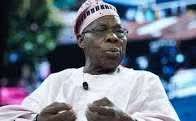
Former President of Nigeria, Chief Olusegun Obasanjo, has said that the root causes of Nigerian Civil War are still predominant in the nation today, almost 50 years after the civil war.
Obasanjo, stated this on Tuesday in Abuja during the launch of a book entitled, –Destiny–written by Mrs. Cecilia Nguungwan Agusah.
In a video message to the event, he cautioned that the root causes of the Civil War remain present till date.
According to him, “Sadly, even today, the environment that gave rise to the war is still very much the same in our country.
“Ethnic tensions, inequality, injustice, poor governance, insecurity, mismanagement of diversity, among many others continue to fester.”
Describing the book as urgent call, the former President said the book is a timely reminder of “our gloomy past and a warning for the future, if we do not retrace our steps and begin to seriously fix the problems that bedevil our country.”
According to him, “The book,–Destiny– a fictional account based on real events from the Nigerian Civil War, was presented to the public today with a call for Nigeria to confront unresolved issues that still threaten national unity five decades after the conflict.
He noted the importance of continued storytelling from the war era: “Each story offers us a new perspective of what transpired before, during or after the war.”
Obasanjo, who regretted his inability to attend the book launch physically, however, commended the author, Mrs. Agusah, for documenting her experience at the age of 82 years.
Earlier, the author of the book, said the writing of the book is “not intended to reopen old wounds, it is intended to heal them.”
Agusah said: “It is a call to reconciliation instead of bitterness, forgiveness instead of revenge, understanding instead of suspicion, and love instead of hatred.
“Through characters from different regions of Nigeria, I sought to remind us that despite our diversity we share one destiny as a people.
“Our differences should never divide us, rather they should enrich us and strengthen our unity.
“I also hope that this book will help younger generations, many of whom know about the civil war only through stories.
“They were never there to understand the devastating consequences of conflict and the priceless value of peace.
“Violence should never be an option. Our future must be built on dialogue, mutual respect, and the courage to forgive.
“We should never again allow our nation to travel the path of ethnic division and war.”
Dr. Patrick Pillah, Book Reviewer and a
Senior Lecturer, Department of Public Administration, Veritas University, Abuja, said, “DESTINY” is a historical novel set against one of the most defining periods in Nigeria’s history—the Nigerian Civil War.
Pillah represented by Mr. Ayo Arowosegbe, explained that while many books have examined the conflict from military or political perspectives, the author adopts a refreshingly different approach.
“She tells the story through ordinary Nigerian families from different ethnic, cultural, and geographical backgrounds, reminding us that beyond the politics of war were real people whose lives, hopes, and relationships were forever changed.
“The novel introduces us to memorable characters such as Yakubu Abbas, Daniel Denen Shaaba, and Ngozi Achebe, whose individual journeys eventually intersect in ways that reflect the complexity and interconnectedness of the Nigerian experience.
“Through these characters, the author successfully portrays the diversity of Nigeria while reinforcing the timeless truth that our common humanity is greater than our differences.
“The title, _DESTINY_, is itself deeply symbolic. It suggests that while historical events may shape our lives, individuals and nations still possess the capacity to determine how they respond to adversity.
“The author reminds us that even in moments of tragedy, hope remains possible, healing is attainable, and reconciliation is achievable.”
“Destiny” by Mrs. Cecilia Agusah is a novel that uses inter-regional Nigerian characters to explore themes of reconciliation, forgiveness, and the shared destiny of a diverse nation, drawing on lessons from the Nigerian Civil War.