
Tensions over xenophobia in South Africa have escalated sharply, with the Nigerian High Commission in Pretoria reportedly overwhelmed as thousands of locals marched against undocumented migrants. The Federal Government says Nigerians still in the country remain safe, but it has intensified evacuation efforts as anti-immigrant protests and violence raise fresh alarm.
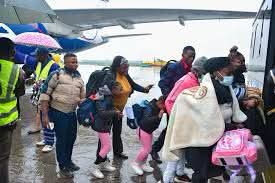
The latest development comes after a fresh batch of 269 Nigerians arrived at Murtala Muhammed International Airport, Lagos, on Tuesday, June 30, 2026. They landed at 10:48 a.m. aboard an Air Peace flight from Johannesburg. The flight was the third government-coordinated evacuation in recent weeks, and the second in June alone. On June 24, 66 Nigerians had returned via Value Jet, facilitated by CEO Kunle Soname.
The evacuations follow renewed anti-migrant demonstrations across South Africa. On Tuesday, thousands marched in major cities demanding the removal of undocumented foreigners. Anti-migrant groups had set the same day as a deadline for foreigners without papers to leave. Police and private security were deployed nationwide to prevent a breakdown of order.
South African authorities said about 25,000 migrants have been repatriated so far, most from other African countries. They also reported about 50,000 undocumented migrants arrested since January. While police described most protests as peaceful, there were isolated cases of looting, vandalism and assaults. In Johannesburg, the military was sent to Hillbrow after a teenager was reportedly shot and a vehicle set ablaze. In Yeoville, protesters allegedly threw bricks at migrant homes, while in Germiston, demonstrators said they handed suspected undocumented persons to police. Five people were arrested in Soweto for looting a foreign-owned shop. In KwaZulu-Natal, about 10 people were arrested for looting and one woman for assaulting an officer.
The violence has not spared Nigerians. A businessman known as ‘Big Joe’ was shot dead outside his shop in Witbank, Mpumalanga, on Sunday. The police have not stated a motive. The mission is also investigating two earlier deaths: Amaramiro Emmanuel, allegedly assaulted by soldiers in Port Elizabeth on April 20, and Ekpenyong Andrew, found dead in a Pretoria mortuary after an April 26 arrest. Abuja has demanded full investigations.
President Cyril Ramaphosa met protest leaders before the marches and urged calm. In a newsletter he said lawfully resident foreigners “work, study, raise families, invest in our economy and contribute positively” and deserve legal protection. He warned that the right to protest does not cover intimidation or violence.
Embassy under pressure
The surge in fear pushed many Nigerians to the Pretoria mission. Acting High Commissioner Temitope Ajayi said the crowd grew after community groups announced a mass report, contrary to the embassy’s plan. He explained that only screened individuals on scheduled batches were to report when flights were ready. “Some of these people you said are staying at the church were those who defied the mission’s notification,” he said, adding that about 150 people are currently at the mission awaiting their turn.
The Nigerian Union South Africa said it advised citizens to stay indoors while monitoring the situation. President General Barrister Smart Nwobi said Ramaphosa had assured adequate security deployment. He added that the union, the mission and other groups were feeding returnees and providing blankets. About 79 men were housed in a church, while over 80 women and children remained at the High Commission. Nwobi said more than 600 Nigerians have been screened for evacuation, with 400 others still hoping to leave.
FG’s response
The Ministry of Foreign Affairs, in a statement by spokesperson Kimiebi Ebienfa, said evacuation continues despite the June 30 deadline. Director of African Affairs, Ambassador Haruna Ali-Gombe, received the 269 returnees in Lagos and delivered President Bola Tinubu’s assurance that the government remains committed to protecting Nigerians abroad. The ministry said more flights are expected in the coming days for all cleared volunteers.
Community leaders say documentation issues are worsening vulnerability. NICASA Deputy Chairman in the Western Cape, Leo Azebeokhai, urged Abuja to push for mobile passport services and faster permit renewals. He said many Nigerians carry expired papers because Johannesburg is the only passport renewal centre, and travel costs are high. He also faulted delays in evacuations, saying the government promised five flights but only two have operated.
Retired ambassadors called for stronger diplomacy. Ogbole Amedu-Ode urged closer monitoring and engagement with Pretoria, while Mohammed Mabdul proposed an inter-ministerial evacuation committee, AU-level action, and even economic sanctions on South African firms like MTN and DStv.
Student leaders are also raising pressure. NAUS President Meshach Nwankwo condemned the attacks and gave South Africa one week to act, threatening nationwide protests and moves against South African businesses in Nigeria.
For now, the embassy says it will continue batch evacuations, while providing shelter and food to those stranded. With protests expected weekly for the next six months, according to March and March leader Jacinta Ngobese-Zuma, the Nigerian mission says diplomatic engagement at the highest level will continue to secure the safety of its nationals.