
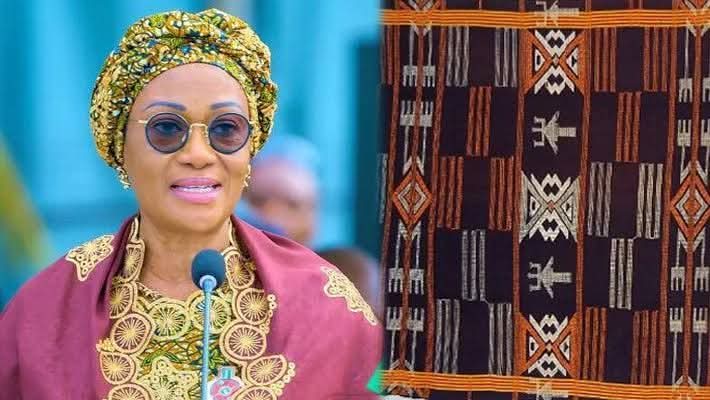
Nigeria’s First Lady, Senator Oluremi Tinubu, has expressed her admiration for the famous Akwete fabric, declaring that she would proudly wear the traditional Akwete buba and wrapper at the inauguration ceremony of President Bola Ahmed Tinubu should he secure re-election in the 2027 general elections.
The First Lady made the remark during her maiden visit to the historic Akwete Weaving Cooperative Village in Ukwa East Local Government Area of Abia State, where she also unveiled a major intervention aimed at revitalising the centuries-old indigenous textile industry.
Addressing members of the weaving cooperative, traditional rulers, community leaders and other dignitaries, Mrs. Tinubu praised the craftsmanship and cultural significance of the Akwete fabric, describing it as one of Nigeria’s treasured indigenous textiles that deserves greater recognition both locally and internationally.
She said the rich heritage represented by Akwete weaving aligns with ongoing efforts to preserve Nigeria’s cultural identity while creating sustainable economic opportunities for local artisans, particularly women.
In a symbolic show of support for the textile industry, the First Lady announced that she would proudly wear an Akwete buba and wrapper if President Tinubu is sworn in for a second term in office following the 2027 presidential election.
Her declaration drew applause from members of the cooperative and other attendees, many of whom described the gesture as a significant endorsement of one of Nigeria’s oldest traditional weaving cultures.
Mrs. Tinubu also announced a ₦2 billion intervention package aimed at reviving the Akwete weaving industry and strengthening the capacity of local artisans to expand production and compete in both domestic and international markets.
According to her, the financial support is intended to preserve the centuries-old craft while improving the livelihoods of hundreds of women and families whose income depends on the production of the iconic handwoven fabric.
She stressed that the intervention reflects the Federal Government’s commitment to promoting indigenous industries, preserving cultural heritage and encouraging economic empowerment through entrepreneurship.
The First Lady noted that traditional industries such as Akwete weaving possess enormous potential to generate employment, promote tourism and contribute significantly to Nigeria’s non-oil economy if adequately supported.
She commended members of the Akwete Weaving Cooperative for preserving the unique craftsmanship over generations despite numerous economic and production challenges.
Mrs. Tinubu encouraged the artisans to continue maintaining the high standards associated with the Akwete fabric, assuring them that the government would continue to explore opportunities to expand market access for locally produced textiles.
She further urged young Nigerians to embrace indigenous skills and creative industries as viable sources of income, noting that preserving traditional crafts is essential to safeguarding the nation’s cultural identity.
The First Lady observed that promoting locally made products would not only strengthen the economy but also reduce dependence on imported textiles while creating more employment opportunities across rural communities.
The Akwete weaving tradition, which originated in Abia State, is widely recognised for its distinctive handwoven designs and intricate patterns. The fabric has become a symbol of Igbo cultural heritage and is worn during important ceremonies, festivals and other special occasions across Nigeria.
Industry stakeholders have repeatedly called for greater government investment in the sector, arguing that improved access to finance, modern production facilities and expanded marketing opportunities could transform Akwete weaving into a globally competitive textile brand.
Mrs. Tinubu’s visit and the announcement of the ₦2 billion intervention have therefore been welcomed by artisans and community leaders, who expressed optimism that the initiative would boost production, preserve the ancient craft and improve the welfare of families dependent on the industry.
The visit forms part of the First Lady’s broader engagements across the country aimed at promoting women’s empowerment, supporting local industries and encouraging initiatives that preserve Nigeria’s rich cultural heritage while fostering inclusive economic development.