
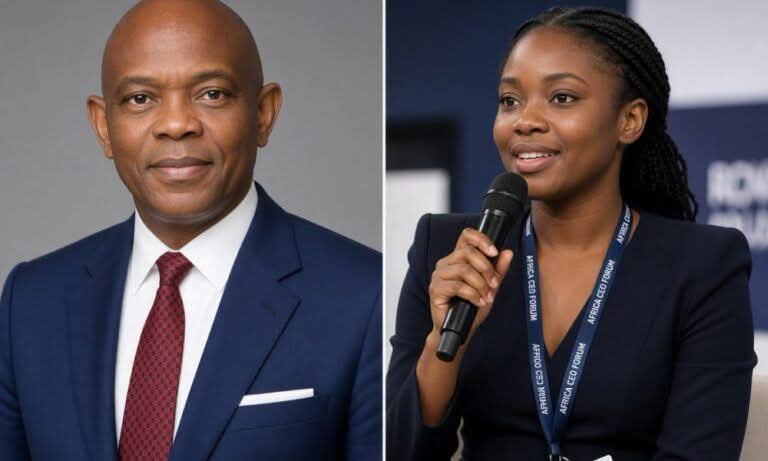
A brief but striking encounter between UBA Group Chairman Tony Elumelu and a young graduate trainee has ignited a fierce debate among Nigerians over respect, hierarchy and the limits of workplace informality.
The moment occurred during an interactive session at the United Bank for Africa’s 2026 Graduate Management Accelerated Programme ceremony, reports Gwg.ng.
Stepping up to the microphone, the female trainee began confidently: “Good morning, Tony.”
Elumelu initially appeared unsure of what she had said, asking, “Toyin?” When she repeated the greeting, the billionaire businessman calmly but firmly corrected her.
“No, you won’t call me Tony. You’ll call me Mr Elumelu or TOE—or Chairman. I don’t subscribe to that kind of Oyinbo life,” he said.
— OLAMIDE 🌸💖 (@Olamide0fficial) August 20, 2026
The trainee immediately adjusted her greeting to “Good morning, Mr Elumelu” and proceeded with her question.
The short exchange quickly went viral, transforming an ordinary corporate interaction into a national conversation about the meaning of respect in the modern Nigerian workplace.
‘Respect must come first’
Many Nigerians supported Elumelu, arguing that the trainee should have addressed him formally because of his age, position and the setting in which the encounter occurred.
To them, using “Mr Elumelu,” “Chairman” or another recognised title was not an act of submission but an acknowledgement of professional boundaries and Nigerian cultural values.
@dahny_jay argued that even Westerners would probably have addressed him as “Mr Elumelu” in such a formal setting, describing the trainee’s approach as disrespectful.
@YinKysmileS said Nigerians should not automatically treat every Western practice as a symbol of progress.
“In Nigerian culture, titles and respectful forms of address often communicate honour, not inferiority,” the user wrote, adding that it would have been more appropriate to begin with “Mr Elumelu” and wait to be invited to use his first name.
@Tchigo_inc similarly argued that the trainee and Elumelu were neither friends nor business partners of equal standing. The user maintained that respect should guide an individual’s first interaction with a much older senior executive.
For those in this camp, the safest rule is simple: begin formally and relax only when the senior person permits it.
Critics question corporate hierarchy
Others defended the trainee, arguing that first-name communication is common in modern multinational organisations and can help create a more open, collaborative workplace.
@nurayusufade said there was nothing inherently disrespectful about calling Elumelu by his first name, particularly within a global corporate environment.
The user argued that informal workplace cultures could make employees more comfortable contributing ideas, questioning decisions and engaging senior executives without being constrained by rigid hierarchy.
@DanielRegha also questioned whether Elumelu would have reacted similarly if a prominent foreign journalist or business executive had addressed him simply as “Tony.”
“If a reporter from a big media house abroad calls him Tony, he won’t be this displeased,” he wrote, suggesting that the acceptability of first-name address sometimes depends on the status or nationality of the person speaking.
Some commenters said the trainee might simply have followed corporate practices elsewhere, where chief executives and junior employees routinely address one another by their first names.
They argued that respect should be judged by a person’s tone, conduct and competence—not merely by the use of titles.
Gen Z meets Nigerian corporate tradition
Other reactions treated the encounter more humorously.
“Good morning, Tony. Gen Z get mind gan,” @whoistosan wrote, capturing the generational dimension of the controversy.
Some joked that the trainee had displayed extraordinary confidence, while others speculated that she might have relied on an AI-generated question without preparing for the etiquette of addressing one of Africa’s most prominent business leaders.
The encounter has resonated partly because UBA presents itself as a global African institution operating across several continents. Its graduate programme is designed to prepare young professionals for leadership and has trained thousands of employees across Africa, according to the bank.
That international outlook, however, must coexist with a Nigerian society in which age, titles and seniority remain important markers of respect.
The viral moment therefore represents more than one trainee’s choice of greeting. It captures the collision between two workplace cultures: one that values hierarchy, formality and deference, and another that believes first-name communication encourages accessibility, confidence and innovation.
Neither side appears ready to concede.
For supporters of Elumelu, professionalism begins with observing cultural and institutional boundaries. For his critics, a modern organisation should be secure enough to allow informality without interpreting it as disrespect.
The debate has ultimately left Nigerian workers and employers confronting a delicate question: in the contemporary corporate world, where does legitimate respect end—and unnecessary hierarchy begin?
.