
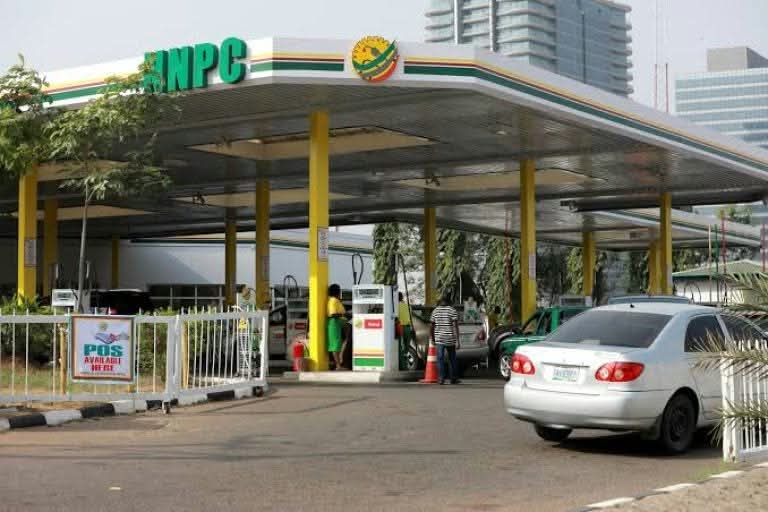
Motorists have expressed frustration over their inability to benefit from the Federal Government’s petrol discount at Nigerian National Petroleum Company Limited (NNPCL) filling stations, as rising pump prices in parts of the country threaten to undermine the impact of the intervention.
The complaints come amid reports of petrol prices approaching ₦1,900 per litre in some locations, while the government’s temporary relief measure offers a reduction of only ₦66 per litre at participating NNPCL retail outlets.
The situation has raised questions about the reach of the discount, particularly as motorists who pay directly at the pumps in Abuja have reportedly continued to pay ₦1,405 per litre, compared with ₦1,339 for customers who make payments through NNPCL’s mobile application.
The News Agency of Nigeria (NAN) reports that the Minister of Finance and Coordinating Minister of the Economy, Taiwo Oyedele, announced the 30-day intervention as part of measures to cushion the impact of rising petrol prices on households, businesses and public transport operators.
The Federal Government subsequently announced plans to negotiate a ceiling of ₦1,350 per litre on petrol’s ex-gantry or landing cost, with the aim of reducing the immediate impact of fluctuations in international crude oil prices and exchange rates on domestic fuel prices.
However, the proposed ceiling is not a nationwide retail pump-price cap. It applies to the price at which petrol is supplied from the refinery or import point, meaning distribution and retail costs can still affect the final price paid by consumers.
Motorists face digital barrier
Checks by NAN at NNPCL filling stations in Abuja showed that customers paying directly at the pumps were charged ₦1,405 per litre, while motorists using the company’s mobile application paid ₦1,339 per litre.
The arrangement has left some customers questioning why a discount intended to ease the burden of rising fuel prices is not automatically available to everyone buying petrol at the company’s stations.
A motorist, Babatunde Atoye, told NAN that the discount was not automatically applied to purchases made at the pumps.
He said customers had to access the reduction through the NNPCL mobile application.
A petrol attendant, who spoke on condition of anonymity, similarly said motorists had to download the application and make payments through the platform to qualify for the discount.
Another motorist, Abdulrahim Malik, questioned the accessibility of the scheme for Nigerians without smartphones or the digital skills required to use the application.
“How do people who do not have access to Android phones benefit from the discount?” he asked.
Malik said some Nigerians might struggle to navigate the platform because of limited literacy or unfamiliarity with digital payment systems.
George Ochendu, another stakeholder, commended the Federal Government for attempting to reduce the cost of petrol but expressed concern that network difficulties could prevent customers from accessing the discount.
“They said we should download the app and follow the procedure. NNPC Ltd. is still selling petrol at ₦1,405 per litre, but on the application, it is ₦1,339,” he said.
A consumer, Toyin Daniel, also complained that motorists who bought petrol directly at the pumps did not automatically benefit from the reduction.
She questioned how the government expected consumers unfamiliar with digital platforms to access the discounted price.
The complaints suggest that the effectiveness of the intervention depends not only on the amount of the discount but also on how easily motorists can access it.
NNPCL extends discount to October 31
The NNPCL introduced the ₦66-per-litre discount on October 1 to mark Nigeria’s 66th Independence Anniversary.
Following the Federal Government’s announcement of additional measures to address rising fuel prices, the company extended the promotion until October 31.
In a statement issued on October 9, NNPCL said the extension was intended to support government efforts to cushion the impact of rising fuel costs on households, businesses and the wider economy.
The Presidency also said NNPCL Retail had agreed to forgo its petrol retail profit margin for the duration of the intervention, allowing it to sell fuel at cost within the agreed arrangement.
The government maintained that the measure was not a return to the blanket petrol subsidy removed in 2023 but a temporary effort to reduce the pressure of rising prices on consumers.
Oyedele said the initiative was designed to provide relief, particularly to public transport operators, while international oil prices remained volatile.
The discount was initially conceived as a promotional offer to encourage customers to adopt NNPCL’s digital payment platform. It subsequently became part of the government’s wider response to rising fuel costs.
However, motorists’ complaints about the app requirement have raised questions about whether the initiative is reaching the people most affected by the increase in petrol prices.
NNPCL could forgo ₦4.62bn in gross sales revenue
Beyond the access controversy, the discount has drawn attention to the scale of NNPCL’s retail operations and the financial implications of reducing its selling price.
According to figures disclosed by Oyedele, NNPCL Retail supplies approximately 70 million litres of petrol monthly.
At ₦1,405 per litre, sales of 70 million litres would generate about ₦98.35bn in gross revenue. At the discounted rate of ₦1,339 per litre, the same volume would generate approximately ₦93.73bn.
The difference amounts to ₦4.62bn, assuming the entire volume qualifies for the discount.
The figure is an estimate of the potential reduction in gross sales revenue, not necessarily a loss of profit. The actual financial impact would depend on how much petrol is sold through the discounted channel and the volume of sales during the promotional period.
Oyedele said the discount was structured around NNPCL’s retail margin rather than a government-funded subsidy.
He explained that the company had been encouraged to limit the reduction to its profit margin so that the initiative would provide temporary relief without placing an unsustainable burden on its finances.
The minister also said NNPCL’s relatively small share of the overall petrol retail market made the intervention manageable.
Nevertheless, the limited reach of the company’s outlets compared with the wider network of fuel marketers means that a discount confined to NNPCL stations cannot, on its own, guarantee cheaper petrol nationwide.
Analyst questions limited reach of intervention
Public analyst Jide Ojo said the reduction could have limited impact because NNPCL operates a relatively small number of retail outlets compared with the wider fuel retail market.
He argued that motorists should not have to travel long distances or spend valuable working hours searching for NNPCL filling stations to access cheaper petrol.
Ojo also said petrol selling at ₦1,339 per litre remained beyond the reach of many Nigerians struggling with the cost of living.
He called on the Federal Government to explain how it intended to ensure that the benefits of lower petrol prices reached consumers across the country.
The analyst further expressed concern over reports that the Dangote Refinery was not receiving sufficient crude oil locally to meet its requirements, forcing it to rely partly on imported crude.
He urged the Federal Government to consider supplying crude oil to the refinery at a discounted rate, provided the arrangement translated into lower prices for refined petroleum products.
“The Federal Government should consider supplying crude oil to the Dangote Refinery at a discounted rate, with a corresponding reduction in the price of refined petroleum products sold to Nigerians,” he said.
According to Ojo, such an arrangement could enable Nigerians to purchase cheaper petrol from different retail outlets rather than depend on a limited number of NNPCL stations.
He also argued that Nigeria’s reported 20 per cent equity interest in the Dangote Refinery could provide an avenue for greater transparency and accountability in monitoring crude oil supplies to the facility.
Ojo warned that restricting access to discounted petrol to selected outlets could result in queues, lost working hours and additional transportation expenses for motorists.
The analyst’s concerns highlight a broader question: whether temporary price relief at a limited number of outlets can substantially ease the cost of transportation and living across a country where petrol remains a major input for businesses and households.
Nigeria’s refining challenges persist
Economist Aliyu Illias said Nigeria had yet to fully harness the potential of its petroleum resources despite exploring them for about six decades.
He said the country had made only average progress in developing its oil and gas industry, arguing that successive administrations had failed to establish sufficient refining capacity in both the public and private sectors.
According to him, Nigeria has also not adequately developed the range of products and by-products obtainable from petroleum beyond petrol, diesel and related fuels.
Illias noted that the country’s state-owned refineries had not been operating at the level required to meet domestic demand, making the Dangote Refinery a significant development in domestic refining.
However, he said the impact of domestic refining on the livelihoods of Nigerians had not been as substantial as expected.
He also expressed concern that Nigeria was only beginning to embrace Compressed Natural Gas (CNG) as an alternative fuel while some countries were increasingly shifting towards electric vehicles.
According to him, Nigeria has yet to take full advantage of its abundant natural gas resources despite years of gas flaring.
Illias argued that more refineries should have been developed across the country to meet domestic demand and generate additional revenue through exports of refined petroleum products.
He warned that the global transition away from fossil fuels posed a long-term challenge for Nigeria, stressing the need to diversify the economy and maximise the benefits of oil and gas resources while global demand remained significant.
Temporary relief amid rising costs
The latest petrol discount debate comes against the background of the Federal Government’s decision to remove the petrol subsidy in 2023 and allow market forces to play a greater role in determining pump prices.
While the policy was intended to reduce the fiscal burden of subsidising fuel, petrol price increases have continued to place pressure on transportation costs, food prices and household spending.
The new discount represents a limited intervention in a market increasingly exposed to international crude oil prices, exchange-rate movements and domestic distribution costs.
The government has argued that selling petrol at cost for a limited period can provide relief without restoring the previous subsidy arrangement. However, the app-only restriction and the limited number of participating outlets have raised questions about how widely that relief can be felt.
For motorists facing rising pump prices, the immediate concern is whether the discount can be accessed easily and whether it is substantial enough to make a meaningful difference.
With the promotion scheduled to end on October 31, attention will also turn to whether the Federal Government and NNPCL will extend the arrangement, modify the payment requirements or introduce broader measures to ease petrol costs.
For now, the central challenge remains ensuring that a temporary discount translates into practical relief for consumers rather than a benefit accessible mainly to motorists who can navigate a particular digital platform and locate participating filling stations.
.