
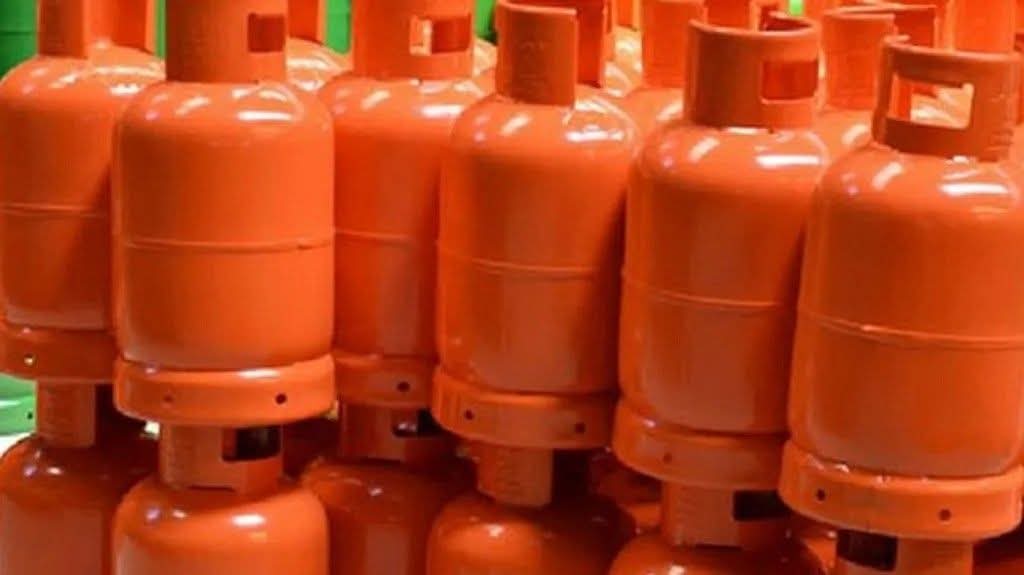
Fresh concerns have emerged over the rising cost of cooking gas across Nigeria as checks conducted on Monday revealed significant increases in prices in several parts of the country, worsening the burden on households and small businesses already grappling with economic hardship.
Investigations showed that the price of Liquefied Petroleum Gas (LPG), commonly known as cooking gas, now ranges between N1,400 and N2,000 per kilogramme depending on the location, with many residents lamenting the rapid increase within just a few weeks.
In Lagos State, residents in different communities reported varying prices. In Ikorodu, consumers said they now buy cooking gas at N1,800 per kilogramme, compared to about N1,300 recorded barely a month ago. Around Afeeze Bus Stop in the Ogba area, the price climbed to N2,000 per kilogramme from approximately N1,500 within three weeks, representing one of the sharpest increases recorded in the state.
Residents in Akoka, Yaba, also confirmed that cooking gas currently sells for about N1,500 per kilogramme, while consumers in Ojota said they purchased the product for N1,400 per kilogramme.
The situation is not limited to Lagos. In Ogun State, particularly around the Redeemed Christian Church of God (RCCG) camp area in Mowe, buyers reported paying as high as N2,000 per kilogramme for cooking gas. Similar increases were also observed in other parts of the country.
In Owerri, the Imo State capital, consumers disclosed that cooking gas was being sold for around N1,500 per kilogramme, while in the Federal Capital Territory (FCT), Abuja, prices varied across districts. Residents in Lugbe reported purchasing the product at N1,480 per kilogramme, whereas those in Lokogoma said they paid as much as N1,600 per kilogramme.
The continuous increase in cooking gas prices has triggered anxiety among many Nigerians, especially low-income earners, food vendors, and small business operators who rely heavily on LPG for daily cooking and commercial activities.
Industry operators have blamed the development on supply disruptions, rising depot costs, transportation expenses, and broader logistics challenges affecting the sector.
The Nigerian Association of Liquefied Petroleum Gas Marketers (NALPGAM), in a joint statement signed by its President, Edu Inyang, and Executive Secretary, Bassey Effiong, warned that the situation was becoming increasingly unbearable for ordinary Nigerians.
According to the association, the average nationwide price of cooking gas has now exceeded N1,500 per kilogramme, creating serious financial strain on millions of households.
“The rising cost and erratic supply of cooking gas have imposed severe hardship on households, food vendors, small businesses, and low-income earners who depend on LPG for daily cooking,” the association stated.
NALPGAM further explained that operators currently purchase a 20-metric-tonne truck of LPG at prices ranging between N25.2 million and N26.2 million, depending on the depot location and associated transportation costs.
The association noted that the high cost of procurement, combined with distribution difficulties and supply shortages, has contributed significantly to the increase in retail prices across the country.
According to the marketers, if urgent intervention is not implemented, the rising cost of cooking gas could further worsen inflation, force businesses to shut down, and increase unemployment levels.
“We cannot stand by and watch millions of Nigerian families suffer in silence while access to clean cooking energy becomes increasingly unaffordable,” the association warned.
The marketers stressed that the affordability crisis surrounding LPG could push many households back to the use of firewood, charcoal, and kerosene, thereby undermining efforts aimed at promoting cleaner and safer cooking alternatives in Nigeria.
Experts have repeatedly warned that increased reliance on firewood and charcoal poses serious environmental and health risks, including deforestation and respiratory illnesses caused by indoor air pollution.
NALPGAM therefore called on the federal government and key stakeholders in the petroleum sector to urgently intervene to stabilise prices and improve supply across the country.
The association specifically urged the Ministry of Petroleum Resources, the Nigerian Midstream and Downstream Petroleum Regulatory Authority (NMDPRA), and the Nigerian National Petroleum Company Limited (NNPCL) to introduce measures capable of easing the pressure on the LPG market.
Among the recommendations made by the association are improved domestic gas allocation, reduction in logistics bottlenecks, expansion of storage and distribution infrastructure, and policies aimed at encouraging local production and stable supply.
Stakeholders within the sector have also raised concerns over foreign exchange volatility and import-related costs, which they say continue to impact the pricing structure of cooking gas in Nigeria.
Many Nigerians have expressed frustration over the development, noting that cooking gas, once promoted as a cheaper and cleaner energy source, is gradually becoming unaffordable for average households.
Some residents interviewed in Lagos and Abuja lamented that the persistent increase in cooking gas prices is compounding the already difficult economic conditions in the country, especially amid rising food prices, transportation costs, and electricity challenges.