
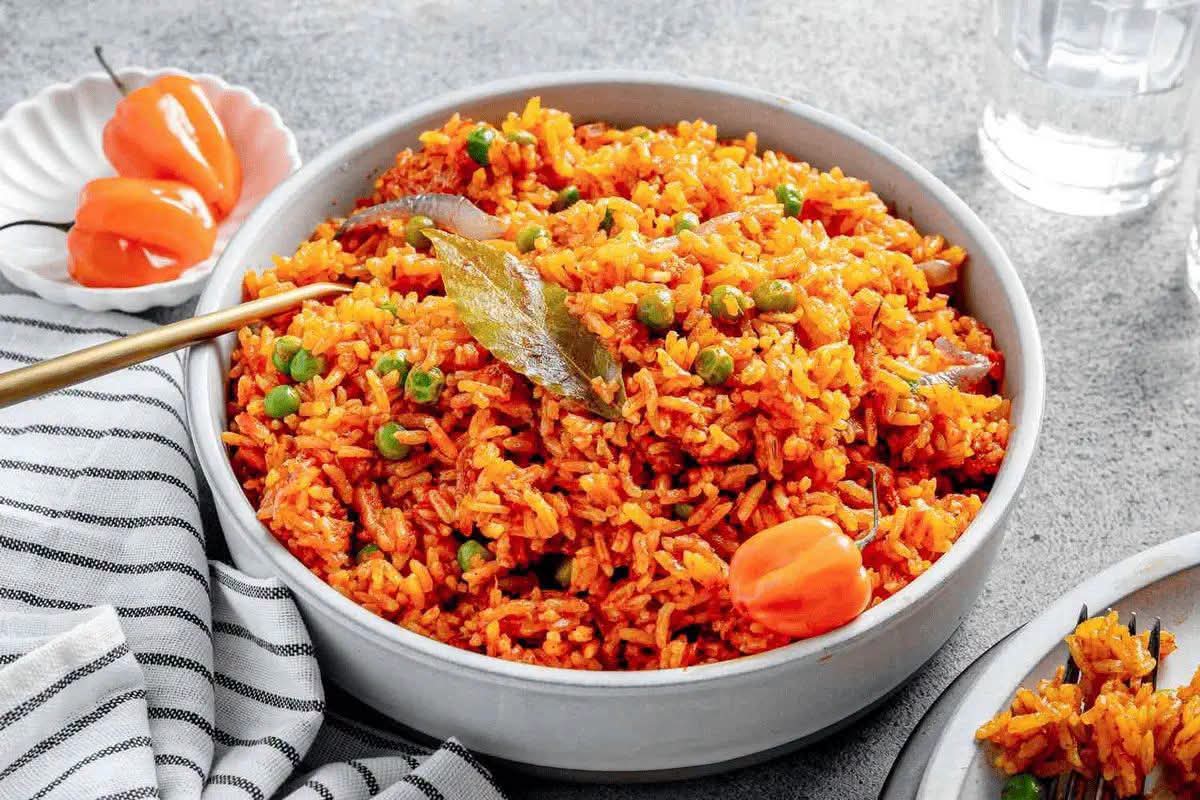
Cost of cooking a pot of jollof rice has risen by more than 400% in every region of Nigeria over the last 10 years.
This is according to the latest Nigeria Jollof Index report released by SBM Intellignence, which shows a steady rise in cost since 2016 when it started tracking.
The report shows that Southwest recorded the sharpest increase of 708.2%.
The data, which tracks the changing cost of preparing Nigeria’s most popular staple meal, shows that no region has been spared from the relentless rise in food prices, highlighting how inflation has steadily eroded household purchasing power over the past decade.
South South Nigeria currently records the country’s highest Jollof Index at N33,533, followed by the Northeast at N32,350 and the Southwest at N31,625. The Northcentral, Northwest and Southeast posted current indices of N27,325, N25,820, and N22,300, respectively.
While the South South has the highest absolute cost of cooking jollof, the Southwest has experienced the fastest price escalation since tracking began, with the index rising 708.2% from its initial level.
North Central followed with a 567.3% increase, while the Northeast, Southeast, Northwest, and South South recorded increases of 467.5%, 441.3%, 428.0%, and 409.0%, respectively.
Historical data shows that the Northwest entered the index in July 2016 with an average cost of N4,890, while the Southeast and Northcentral stood at N4,120 and N4,095, respectively.
The South South first appeared in June 2017 at N5,685, while the Northeast joined in April 2019 with N5,700.
A comparison with Ghana highlights the scale of Nigeria’s challenge. Since Ghana’s Jollof Index began tracking in 2023, Accra recorded increases of 41.9% and 45.5%, substantially lower than the more than 400% increases recorded across every Nigerian region over a longer tracking period.
Despite these different starting points, every region has since recorded unprecedented increases as households grapple with rising transport costs, insecurity in food-producing areas, exchange rate depreciation, higher energy prices, and climate-related disruptions affecting agricultural output.
The decade-long trend mirrors the broader national Jollof Index, which climbed from N4,087 in July 2016 to N29,578 in June 2026, representing a 624% increase.
Nigeria’s food inflation story has evolved through distinct phases. Between 2016 and 2020, prices rose at a relatively moderate pace before accelerating between 2021 and 2023 as insecurity disrupted agricultural production and naira weakness increased the cost of imported inputs.
The sharpest increases came between 2024 and 2026 following the removal of fuel subsidies, foreign exchange reforms, persistent logistics bottlenecks, and worsening climate pressures.
Earlier in June 2026, Nairametrics reported that ginger prices in Lagos climbed to as high as N46,000 per paint bucket, with traders attributing the surge to insecurity in major producing states, supply shortages, disease outbreaks, and rising transportation costs.
Farmers in key ginger-producing states such as Kaduna, Nasarawa, Niger, and Plateau were reportedly unable to access farmlands due to insecurity, while higher logistics costs further squeezed supplies.