
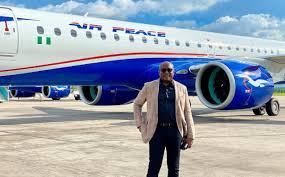
The Chief Executive Officer of Air Peace Limited, Allen Onyema, has said the direct operating cost of running an airline in Nigeria has risen to about ₦180,000 per seat, describing the cost burden as one of the challenges threatening the survival of domestic carriers.
Onyema made the disclosure at the 30th Annual Conference of the League of Airport and Aviation Correspondents (LAAC), themed “Towards a Sustainable Aviation Industry: Balancing Government Revenue Demands with Sector Growth”, on Thursday in Lagos.
“The direct operating cost per seat in Nigeria now is around ₦180,000. It’s around ₦180,000 per seat,” Onyema revealed.Download Interactive Maps
He said the high cost of operating flights makes it difficult for airlines to reduce fares for passengers, particularly amid the various taxes, fees and charges imposed on operators.
According to him, Nigerian airlines face as many as 54 different taxes, fees and charges, with taxes and levies alone capable of consuming up to 65 per cent of airlines’ costs.
He linked the financial burden to the persistent failure of domestic airlines, arguing that the problem is rooted more in the business environment than in the competence or commitment of airline owners.Book Flying Lessons
“The owners of these airlines were successful in other businesses and are still successful in some other businesses today. Why? That’s the question,” he said.
Onyema said Nigeria has the highest failure rate of airlines worldwide, stressing the need for stakeholders to address the conditions under which domestic carriers operate.
“You are right to say that Nigeria has the highest mortality rate of airlines. I mean, the highest failure rate of airlines worldwide is something that we have to sit down and address,” Onyema said.
He also pointed to the disparity in the cost of accessing finance, noting that Nigerian airlines often borrow at significantly higher rates than their foreign competitors.
“When we borrow money, we pay as much as 30 per cent. At the same time, we are expected to compete at the same level with other people who are getting their financing at three and four per cent. What kind of people are we?”, he quizzed.
Onyema said the financing gap further weakens the ability of Nigerian airlines to compete effectively in the international aviation market.Download Interactive Maps
He also criticised the five per cent Ticket Sales Charge, proposing a shift from the percentage-based system to a flat, unit-rate fee per passenger.
He suggested figures such as ₦5,000 or ₦7,000 per passenger, arguing that a predictable charge would give airlines greater certainty while still providing government with revenue.
Onyema stressed that airlines were not opposed to government revenue generation but wanted a system that balances revenue collection with the need to keep operators viable.Book Flying Lessons
He warned that continued airline failures could also expose banks that finance aviation businesses to financial losses.
“If the airlines continue to die, remember, banks will take a hit also,” he said.
The Air Peace chief executive further highlighted the wider economic importance of aviation, saying the industry contributes approximately ₦3.5 billion to Nigeria’s GDP and supports more than 217,000 jobs, figures he attributed to the International Air Transport Association (IATA).
He said aviation’s economic impact extends beyond airlines, supporting employment and activity in sectors including tourism, hospitality and logistics.
Onyema also said Africa’s aviation sector contributes about $75 billion to GDP and supports millions of jobs, while the continent’s aviation market is projected to grow by 4.1 per cent over the next 20 years and potentially double by 2044.Download Interactive Maps
He urged the government, aviation agencies and other stakeholders to approach the challenges confronting the sector with an open mind and recognise aviation as an economic enabler rather than primarily a source of government revenue.