
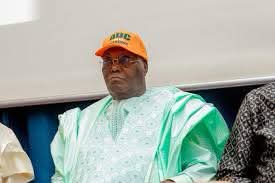
The camp of former Vice President Atiku Abubakar has proposed a production-based fuel subsidy model which it says could reduce the price of petrol to about ₦500 per litre if implemented.
Phrank Shaibu, Senior Special Assistant on Public Communication to Atiku, disclosed this on Monday during an interview on Frontline, a current affairs programme on Eagle 102.5 FM, Ilese-Ijebu, Ogun State.
Shaibu said the proposed system would tie government support directly to crude oil supplied to qualifying domestic refineries rather than to petroleum marketers or imported products.
“Under Atiku’s proposal, the subsidy follows the barrel, not the marketer. Our support is tied directly to crude supply to qualifying domestic refiners,” he said.
According to him, every barrel supplied under the arrangement would be tracked, while participating refineries would be required to ensure that the subsidy benefit was reflected in the final pump price.
Shaibu said Atiku’s team believes the model could lower petrol prices to around ₦500 per litre for about four-and-a-half to five years while Nigeria expands its domestic refining capacity.
He also accused the Tinubu administration of removing fuel subsidy from consumers while granting large waivers and incentives to businesses and multinational companies.
Shaibu claimed that such waivers amounted to about ₦34 trillion and argued that part of the resources could instead be channelled into supporting domestic refining.
“Tinubu claims he has removed fuel subsidy. This same man is using the same money to give waiver to his friends and multinational companies,” he said.
The ₦34 trillion figure and the projection that petrol could be sold at ₦500 per litre are claims made by Shaibu and were not independently verified in the interview.
He also criticised the manner in which President Bola Tinubu announced the removal of fuel subsidy in May 2023, saying the policy was introduced without sufficient preparation for its impact on households.
Shaibu argued that the sharp rise in petrol prices had contributed to increased transportation, food and production costs across the economy
He said Atiku’s proposed intervention would differ from the former subsidy regime because government support would be directed towards production rather than importation.
“The subsidy follows the barrel, not the marketer,” he repeated.
SponsoredDIC Materials Limited Sponsored Advertisement
Shaibu said the proposed system would include mechanisms to monitor crude allocations, refinery output and distribution to prevent diversion.
He added that a digital platform could be introduced to allow Nigerians to monitor how much crude was supplied to individual refineries and how the resulting products were distributed.
According to him, the objective would be to ensure that any government support translates directly into lower prices for consumers.
Shaibu said the model would also encourage investment in local refining and reduce Nigeria’s dependence on imported petroleum products.
He cited the Dangote Refinery, modular refineries and other planned refining projects as facilities that could participate in the arrangement.
He maintained that the subsidy would not be permanent, saying government intervention would become unnecessary once increased domestic production and competition stabilised prices.
“The moment the price becomes stable, there will be no need,” he said.
Shaibu also linked lower energy costs to food production and transportation, arguing that cheaper petrol and diesel would reduce expenses for farmers, processors and transporters.
Using rice as an example, he said lower fuel costs, increased agricultural support and improved security for farmers could help reduce the retail price of food.
He said an Atiku administration would also seek legislative backing for the proposed subsidy framework to improve transparency and accountability.
The proposal comes amid renewed debate over fuel subsidy and the cost of living ahead of the 2027 general election.
The Tinubu administration has consistently defended subsidy removal as necessary to improve public finances and end what it described as an unsustainable system, while opposition figures have continued to criticise its impact on household incomes.