
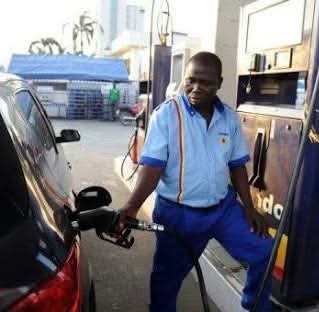
President Bola Ahmed Tinubu, subsidy is subsidy. Your administration says NNPC Retail will give up its profit margin on petrol sales to help ease the hardship Nigerians are facing. It has also suggested ways to keep petrol prices stable, like setting a maximum of ₦1,350 per litre for landing or ex-gantry costs. Still, the government claims these steps are not subsidies. I find it puzzling that the administration admits Nigerians need relief but seems uneasy about calling it what it is.
On September 26, I wrote an article called Nigeria Is Not a Subsidy-Free Economy. I explained that ending the usual petrol subsidy did not mean all subsidies or public support were gone in Nigeria. The latest news supports this point, but it also brings up a bigger question about who owns public resources and how the government relates to the people. Whose money is NNPC giving up, and who should benefit from that sacrifice? For starters, the Nigerian National Petroleum Company Limited is owned by Nigerians through the Federation.
According to Section 53(3) of the Petroleum Industry Act 2021, the Ministry of Finance Incorporated and the Ministry of Petroleum Incorporated hold its shares for the Federation. President Tinubu does not own NNPC, and his administration does not have a personal claim to its earnings. The company is a public asset, and its business should benefit the people it belongs to.
If NNPC gives up some of its earnings to lower petrol prices for Nigerians, it is not an act of presidential generosity. It is simply using the people’s resources to help the people. The profit NNPC gives up could have stayed with the company, but giving that value back to Nigerians through lower prices is a fair way to show public ownership. So, the government is not doing Nigerians a favour; it is letting the real owners benefit from what is theirs. This leads me to a principle from tort law that helps explain my point.
The make-whole principle in tort law aims to return an injured person as closely as possible to their original position through compensation. I use this idea as an analogy for public economic responsibility, not to suggest any legal wrongdoing. When economic changes and policies put a heavy burden on households, steps that help restore some of their lost buying power should be seen as efforts to make things right, not as acts of government kindness.
When we look at the relationship between Nigerians and their publicly owned oil company, it is clear that the people are not outsiders asking a private company for help. They are the main beneficiaries of a business that runs on national resources and public ownership. When the company gives up some earnings to help ease people’s financial struggles, it is trying to balance the value of those resources with the well-being of the people who own them.
Commercial profitability is important, but it should not become an end detached from public welfare. A national oil company that temporarily sacrifices part of its earnings to support its owners pursues a public purpose, not an extraordinary act of kindness. Reading Murray N. Rothbard’s Economic Depressions: Their Cause and Cure, originally published in 1969, makes the government’s insistence on terminology particularly interesting.
Rothbard, an American economist from the Austrian School, criticized how people often try to make tough economic realities sound better by changing the words used. He pointed out that terms like depression were replaced with recession, slowdown, and other softer words. He noticed that changing the language could change how people see things, even if the real situation stays the same.
Calling what NNPC is doing a discount, a temporary margin waiver, or price smoothing does not change who owns the resources being used. The words do not change the real benefit Nigerians get when their public company accepts lower earnings to help them. When judging public policy, what matters most is the substance, not the label. The government’s view also misses an important point in public finance.
What the government decides not to collect can be just as important as what it spends. Tax breaks, special financing, and giving up earnings can all pass economic value to those meant to benefit, even if it does not show up as spending in the budget. When public resources are used to ease hardship, the impact should not be ignored just because the government calls it something else.
President Tinubu, I understand wanting to avoid returning to the old, flawed petrol subsidy system and its financial and management problems. But this should not stop the government from seeing the real value of using public resources to help households. Nigerians have faced repeated rises in transport costs, food prices, and other basic needs. Temporary help from their own national oil company should be seen as part of this bigger economic picture, not as a special favour from the presidency.
The real test of this intervention is how much it restores people’s purchasing power, how many households benefit, and whether the relief reaches transport operators and their passengers. Nigerians deserve to know the value of the profit given up and if transport fares will drop as petrol prices fall. They should also know what will happen after the first 30 days. True accountability means explaining the benefits and costs, not just saying the policy is not a subsidy. My main point stays the same.
Nigeria is not free of subsidies, and there is nothing wrong with using public resources to ease economic hardship. The government manages national wealth for the people, not for itself, and Nigerians are the ones who should benefit. When their own company gives up earnings to lower their financial burden, it is returning value to the people who gave it its public role.
President Tinubu, subsidy is subsidy. More importantly, Nigerians are not getting a favour from their government. They are simply receiving value from what already belongs to them. In tort law terms, the government is trying to make them whole.
Abidemi Adebamiwa is a public policy scholar and Managing Editor of Newspot Nigeria.