
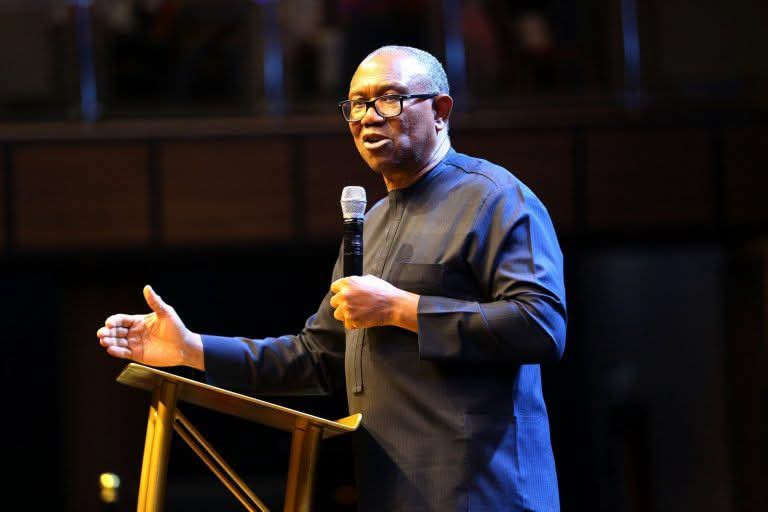
The Peter Obi Media Office has raised the alarm over an alleged political campaign to associate the former Anambra State governor with the Indigenous People of Biafra (IPOB), accusing unnamed political actors of attempting to undermine his growing support in Northern Nigeria.
The office alleged that elements within the ruling party, working alongside some opposition figures, were coordinating a propaganda campaign designed to exploit Nigeria’s ethnic and security sensitivities ahead of the 2027 general elections.
In a statement issued on Monday, November 23, and signed by Idris Zekeri Jnr., the Media Office said the alleged strategy was to portray Obi as politically aligned with IPOB leader Nnamdi Kanu and Biafran separatism, thereby discouraging Northern Nigerians, particularly young voters, from supporting the emerging Obi-Kwankwaso political movement.
It expressed concern that the alleged campaign could involve sponsored reports in Northern newspapers, interviews on radio stations in the region and coordinated social media narratives.
The statement specifically questioned claims circulated by social media personality Gucci Commando, who reportedly alleged that he visited Kanu in Sokoto and attributed political endorsements in support of Obi to the detained IPOB leader.
Describing the claim as extraordinary, the Media Office insisted that it required independent verification and should not be presented as established fact.
The controversy comes against the backdrop of growing political realignments and efforts by opposition figures to build alliances across Nigeria’s geopolitical zones ahead of the 2027 presidential election.
Obi, the Labour Party’s presidential candidate in the 2023 election, has continued to feature prominently in discussions about opposition collaboration, particularly following political engagements involving former Kano State governor Rabiu Kwankwaso.
The Media Office maintained that Obi’s political ambition was neither ethnic nor religious, describing him as a national politician whose agenda extended beyond regional and religious considerations.
It said his commitment to justice, dialogue, national reconciliation and constitutionalism should not be misconstrued as sympathy for separatist movements.
The statement also appealed to Northern Nigerians not to allow what it described as political propaganda to destroy relationships built around the common aspiration for a better country.
According to the office, the Obi-Kwankwaso political engagement is a national initiative rather than an ethnic project.
It challenged those making allegations of links between Obi and separatist movements to produce verifiable evidence, warning against the use of fabricated reports and deliberate misrepresentation to influence public opinion.
The Media Office further urged media organisations, particularly Northern newspapers, to exercise professional caution, independently investigate politically sponsored claims and avoid becoming channels for divisive narratives.
It argued that Nigeria’s pressing challenges, including poverty, insecurity, unemployment, poor education, inadequate healthcare and weak accountability, deserved greater attention than attempts to impose ethnic or religious identities on political candidates.
The intervention highlights the sensitivity surrounding regional voting patterns and opposition coalition-building as political parties and aspirants position themselves for the 2027 elections.
However, the allegations of a coordinated propaganda operation remain claims by the Peter Obi Media Office. The statement did not identify the alleged political actors or provide independently verifiable evidence establishing the existence of such a coordinated operation.