
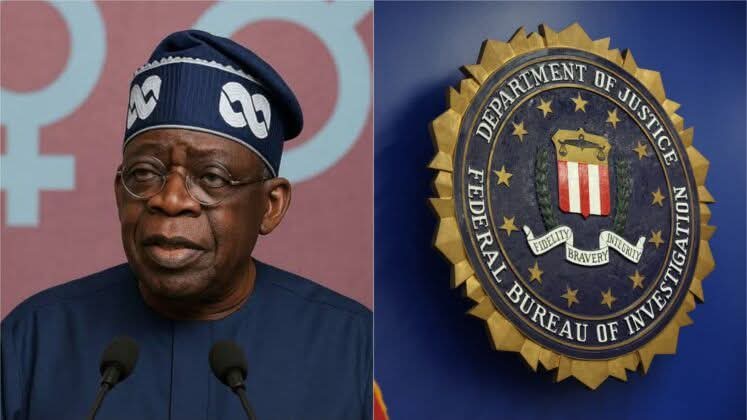
President Bola Tinubu will not face arrest or restrictions on his movement in the United States if he attends the United Nations General Assembly in New York, Nigeria’s Permanent Representative to the UN, Ambassador Jimoh Ibrahim, has declared, citing diplomatic protections under the 1947 UN-U.S. Headquarters Agreement .
Ibrahim made the clarification amid renewed discussions over decades-old allegations relating to Tinubu’s past in the United States and claims that the Nigerian president could face legal action during his planned participation in the 81st session of the UN General Assembly . The ambassador, who chairs the UN Committee on Budget and Administration, said the Nigerian Mission to the UN had not received any communication from the US government indicating that Tinubu would be subjected to restrictions .
Section 11 of the 1947 UN-U.S. Agreement protects representatives of member states and their families from impediments while travelling to and from the UN headquarters district . The provision also covers UN officials, officials of specialised agencies, and persons invited to the headquarters district for official business .
Ibrahim dismissed claims on social media that Tinubu could be arrested during his US visit, saying, “Social media cannot criminalise or arrest President Bola Tinubu, no matter how much the opposition invested in it, those efforts will only end as an exercise in futility” .
The controversy has resurfaced following efforts by US-based political advisory and lobbying firm Von Batten-Montague-York to obtain records from American law enforcement agencies, including the Federal Bureau of Investigation and the Drug Enforcement Administration . The firm, reportedly engaged by former Vice-President Atiku Abubakar under a $1.2 million, 12-month contract, has made allegations linking Tinubu to heroin trafficking during the 1980s and 1990s, but the claims have not resulted in a criminal conviction against the Nigerian president .
In a statement, the firm said there was “no plan to arrest Nigerian President Bola Tinubu over his alleged involvement in heroin smuggling if he attends the UN General Assembly this month” . However, it claimed that Tinubu could be subjected to a publicity campaign and embarrassed in New York, adding that it would continue to ensure that “the White House and Congress fully understand that Nigerian President Tinubu is an alleged heroin trafficker and a liability to President Trump and the United States” .
Ibrahim sought to draw a distinction between allegations and established offences. “Simply accusing someone of a crime does not make that person a criminal,” he said, stressing that allegations must be tested through due process . “Where a conviction cannot be secured in a sensitive criminal matter, the consequences could include substantial compensation,” he added .
The ambassador also noted that attendance at the General Assembly is not based on personal invitations issued to individual presidents; rather, member states are invited to participate in the high-level event . He recalled that a former Nigerian president, whom he stressed was not Tinubu, had previously been restricted to a 10-kilometre radius from the UN headquarters while attending the General Assembly in relation to a drug-related allegation, but the allegation in that case was never proved .