
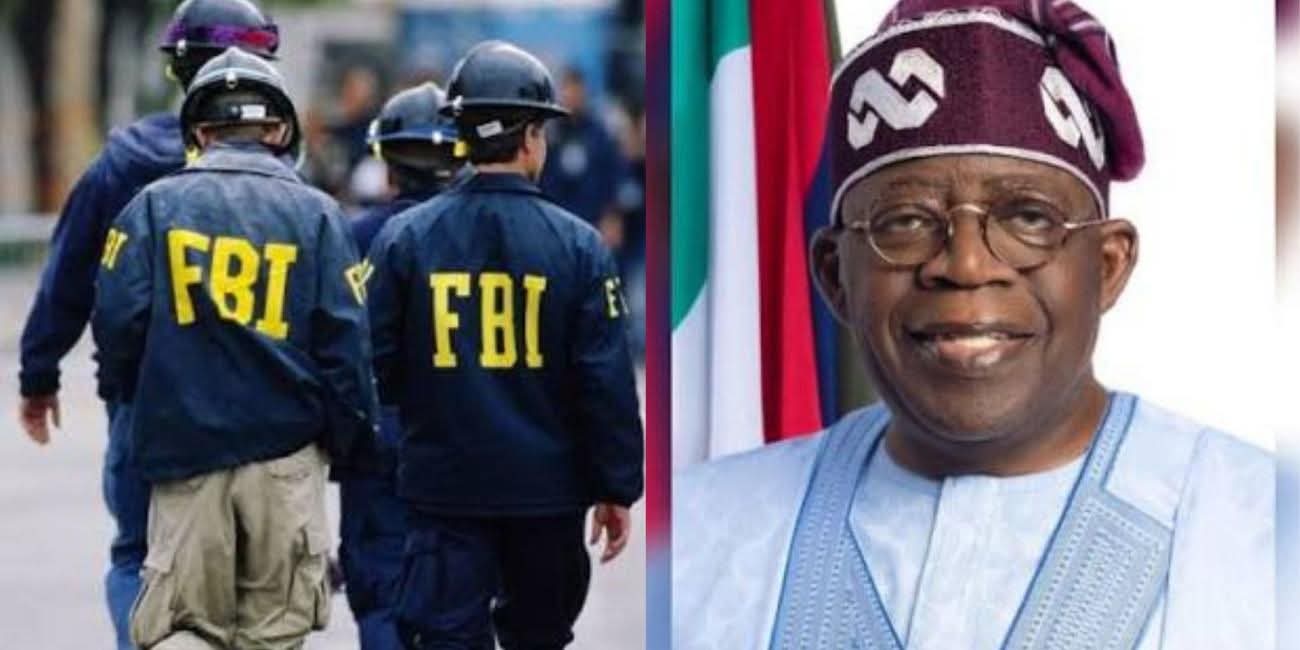
In a sworn declaration submitted to the United States District Court for the District of Columbia on August 28, 2026, the Federal Bureau of Investigation (FBI) has officially acknowledged that Nigerian President Bola Ahmed Tinubu was the subject of a criminal investigation for drug trafficking crimes in the early 1990s.
The document, obtained by Von Batten-Montague-York, a Washington-based lobbying firm hired by former Nigerian Vice-President and African Democratic Congress (ADC) presidential candidate Atiku Abubakar ahead of the 2027 Nigerian presidential election, was posted on X alongside the firm’s statement that they are “carefully going through and redacting where we see fit” a huge volume of records.
FBI’s Sworn Declaration to the Court
In the court filing, the FBI states, “The responsive records herein were compiled in furtherance of the FBI’s investigation of multiple individuals for drug trafficking crimes.”
The agency further confirms that “the court has already determined that an official acknowledgement had been made of an investigation of Bola Tinubu”.
The declaration, signed by an FBI official serving as Acting Section Chief of the Record/Information Dissemination Section (RIDS), details the agency’s handling of Freedom of Information Act (FOIA) requests filed by American transparency activist Aaron Greenspan.
Among the documents sought was the “entire FBI file for Bola Ahmed Tinubu, DOB 3/29/1952, President-Elect of Nigeria as of February 2023” and “FBI 302 interviews with Bola Tinubu from FBI Case No. 245-IP-71386-UUUUUU during the timeframe 1992-1993”.
Acknowledgment of Criminal Investigation
The court previously ruled in April 2025 that the FBI and Drug Enforcement Administration (DEA) could no longer rely on “Glomar” responses; that is, refusals to confirm or deny the existence of records, regarding the Tinubu investigation.
Judge Beryl Howell determined that the agencies had failed to establish sufficient privacy grounds to conceal the fact that Tinubu had been the subject of a criminal investigation.
The FBI’s new declaration serves as the agency’s effort to explain why portions of the records remain withheld under FOIA Exemptions 6, 7(C), 7(D), 7(E), and 7(F), which protect personal privacy, confidential sources, law-enforcement techniques, and information whose disclosure could endanger individuals.
In their post accompanying the document, Von Batten-Montague-York stated: “Update: We received a huge amount of records, which we are carefully going through and redacting where we see fit. Posted below are portions of the @FBI’s own sworn declaration submitted to the court on August 28, 2026.”
The firm added: “The FBI states under oath that the court has already determined that a criminal investigation of Nigerian President Bola Tinubu (@officialABAT) was officially acknowledged.
“Let that sink in: This is a sworn declaration submitted by the FBI to a United States federal court stating that Nigerian President Bola #Tinubu was criminally investigated in connection with the trafficking of #heroin.”
The lobbying firm further noted: “We are posting this document to counter the claim made yesterday that President #Tinubu was never criminally investigated and is simply following the law to protect his privacy. That claim is false, as shown by the FBI’s sworn declaration below.”
Background
The legal battle stems from FOIA requests filed between 2022 and 2023 by Greenspan, who sought records from six US federal agencies concerning a Chicago heroin trafficking ring that operated in the early 1990s.
The requests named four individuals, including Tinubu, Lee Andrew Edwards, Mueez Adegboyega Akande, and Abiodun Agbele
In April 2025, Judge Howell ruled that the FBI and DEA’s Glomar responses were “improper and must be lifted,” ordering the agencies to process non-exempt records. The ruling, however, did not establish that Tinubu committed a drug-trafficking offence or amount to a criminal conviction.
Tinubu’s Response
President Tinubu, through his legal team of Christopher W. Carmichael, Victor P. Henderson, and Oluwole O. Afolabi, has asked the court to prevent further release of records, arguing that disclosure would violate his privacy rights.
His lawyers contend that FOIA is intended to expose what the US government is doing, not to provide a mechanism for extracting personal information about individuals in government archives.
The case has increasingly assumed a political dimension in Nigeria, where developments have been amplified by interests associated with opposition figures, including Atiku Abubakar ahead of the 2027 presidential election
Previously, SaharaReporters reported that the United States Federal Bureau of Investigation (FBI) had asked a federal court in Washington, D.C., for permission to submit confidential declarations under seal and privately explain the basis for withholding records relating to President Tinubu.
The request was contained in a four-page motion filed on August 20, 2026, in the case of Aaron Greenspan v. Executive Office for U.S. Attorneys, et al., Civil Action No. 23-1816 (BAH), before U.S. District Judge Beryl Howell.
According to the filing, one FOIA request, identified as Request Number 1588244-000, sought “the entire FBI file for Bola Ahmed Tinubu, DOB 3/29/1952, President-Elect of Nigeria as of February 2023.”
A second request, numbered 1593615-000, sought “FBI 302 interviews with Bola Tinubu from FBI Case No. 245-IP-71386-UUUUUU during the timeframe 1992-1993.”
The FBI said it had relied on several FOIA exemptions, including Exemptions 6, 7(C), 7(D), 7(E) and 7(F), in withholding information from the records.
The agency said releasing the withheld information could reveal law enforcement techniques and procedures and “could reasonably be expected to endanger the life or physical safety of any individual.”
The FBI said it could not disclose the full basis for its reliance on Exemptions 7(E) and 7(F) on the public record.